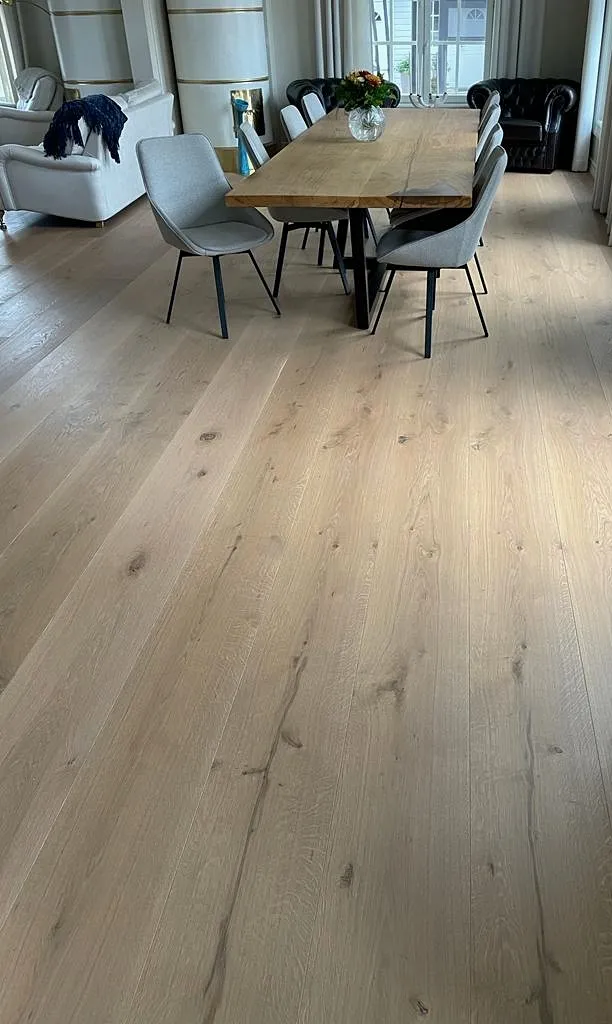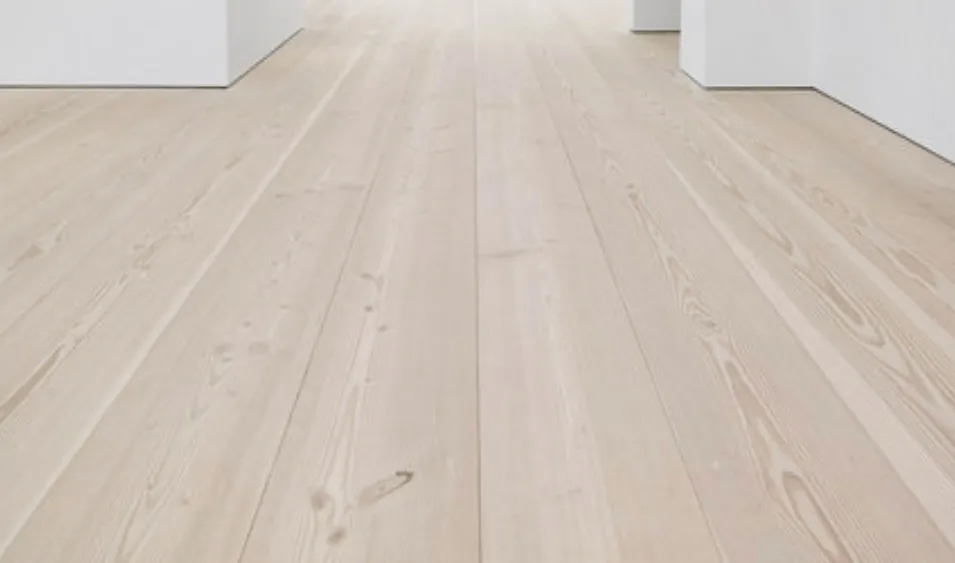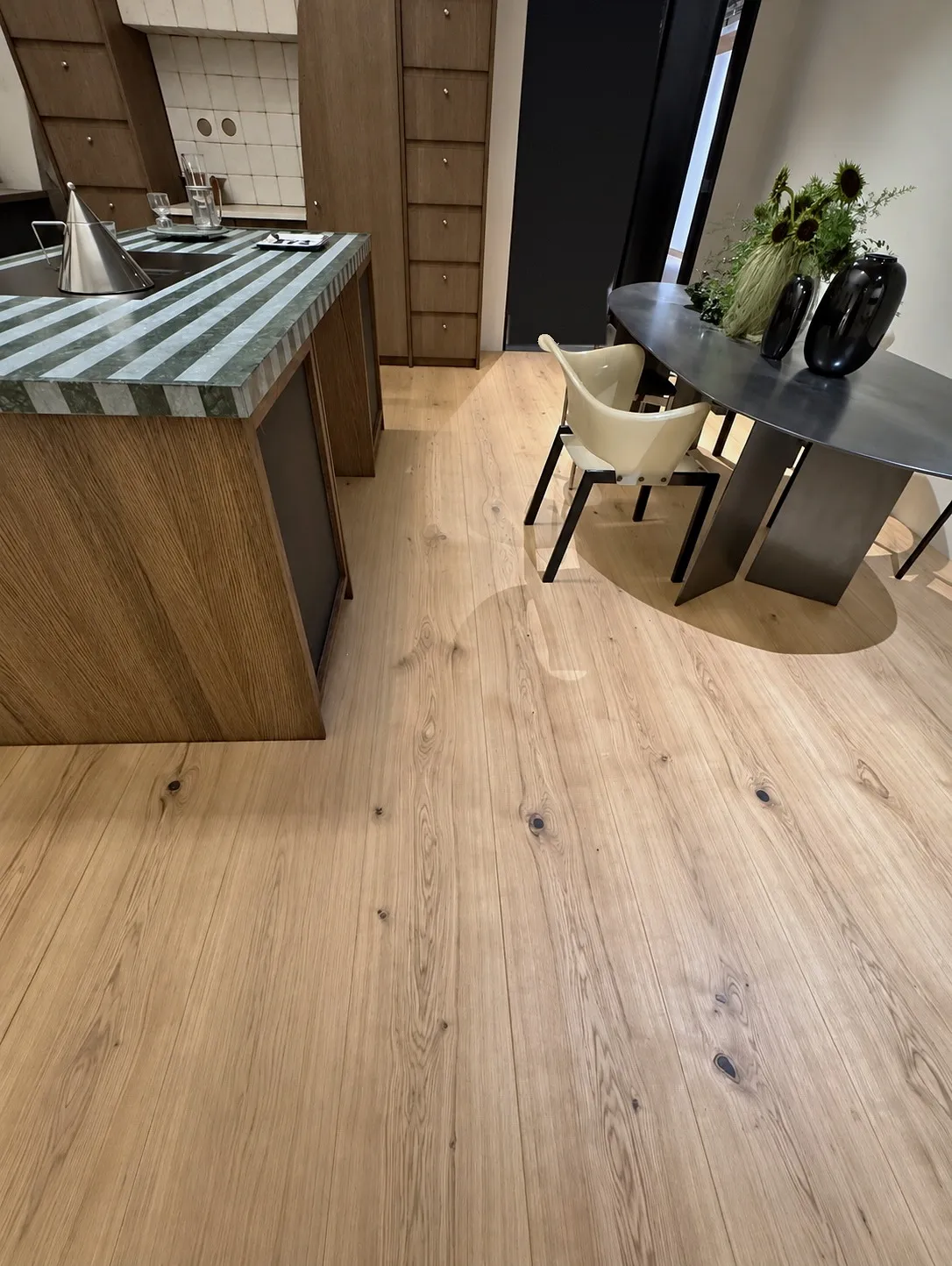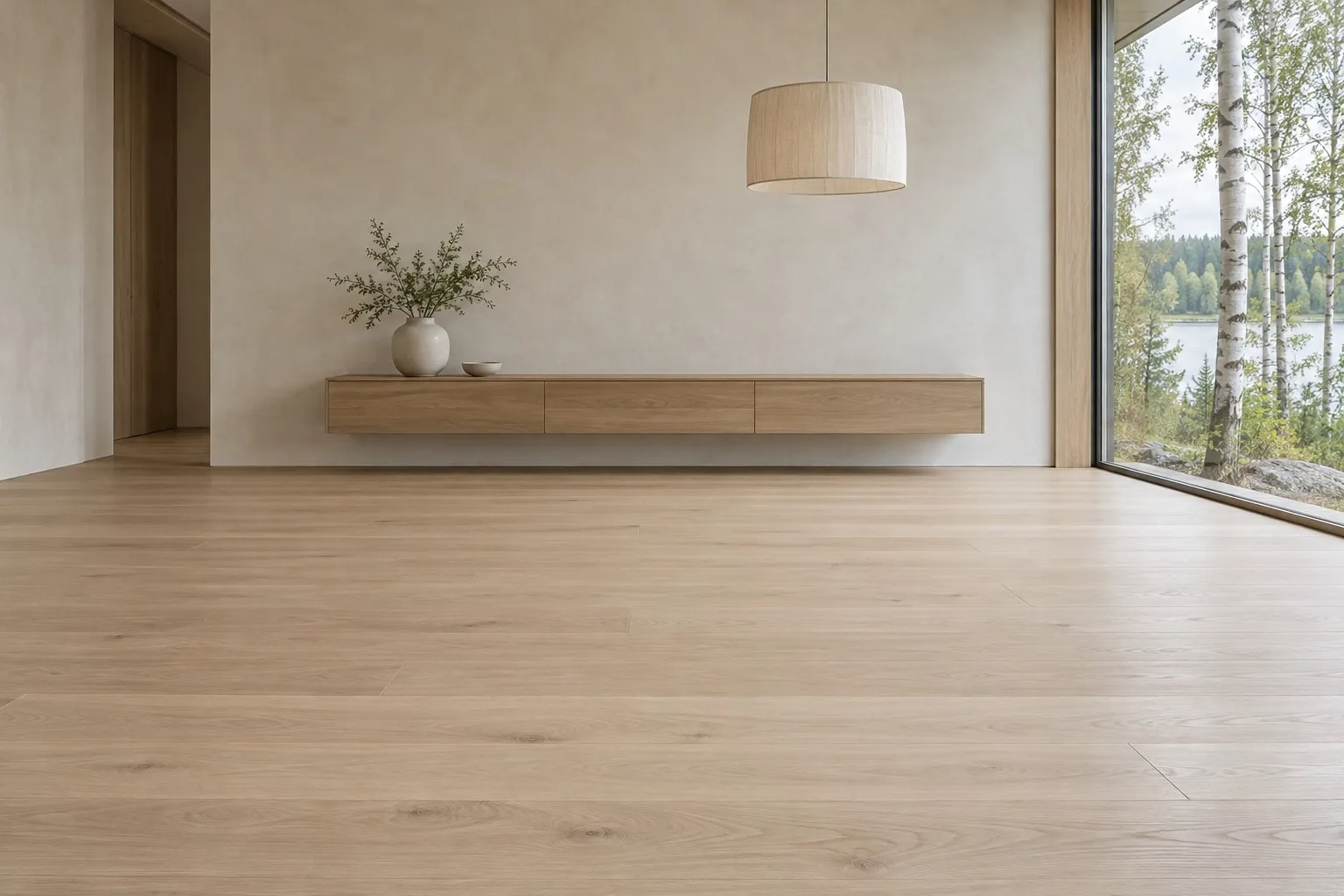
Material guide / Parquet

What makes a wood floor — from the inside out.

Two layers or solid throughout? Discover how parquet is built — and what makes mosaic, Töölö square, solid planks and end-grain parquet so special.

Two-layer parquet

A solid wood top layer on a stabilising backing layer.

Solid parquet

Elements of solid wood throughout — in different formats and patterns.

01 / Stability through bonding

Two-layer parquet

The visible hardwood on top, a stabilising backing layer below: both layers are firmly glued together. The backing supports dimensional stability and reduces the natural movement of the wood. The version shown here is fully glued to the subfloor.

Cross-section of two-layer parquet From the top: surface finish, solid wood top layer, bonding, plywood backing, parquet adhesive and subfloor. Example: a four-millimetre top layer on twelve-millimetre birch plywood. SCHEMATIC CROSS-SECTION 01 Surface02 Top layer03 Bonding 04 Backing05 Adhesive06 Subfloor Example: 4 mm wood + 12 mm birch plywood = 16 mm parquet
Schematic, not to scale. The adhesive and subfloor belong to the installation system — they are not part of the two parquet layers.
  1. SurfaceUV hardwax oil, UV oil or oxidative hardwax oil protect the wood and define its colour, feel and sheen.
  2. Solid wood top layerThe visible wood, for example oak or ash.
  3. Bonding within the elementPermanently joins the top layer to the backing.
  4. Stabilising backing layerBirch plywood in this example. Other products may use a different backing.
  5. Parquet adhesiveBonds the finished element to the subfloor across its whole surface.
  6. Prepared subfloorDry, level, clean and sufficiently load-bearing.

The example 16/4 mm means a total thickness of 16 mm with a 4 mm wood top layer. The binding figures are those given for each product.

Available as two-layer — and as solid.

Planks and pattern parquet are made either as stable two-layer parquet or in solid wood — depending on the project, the subfloor and the heating.

  • Schematic top view of wide planks Planks

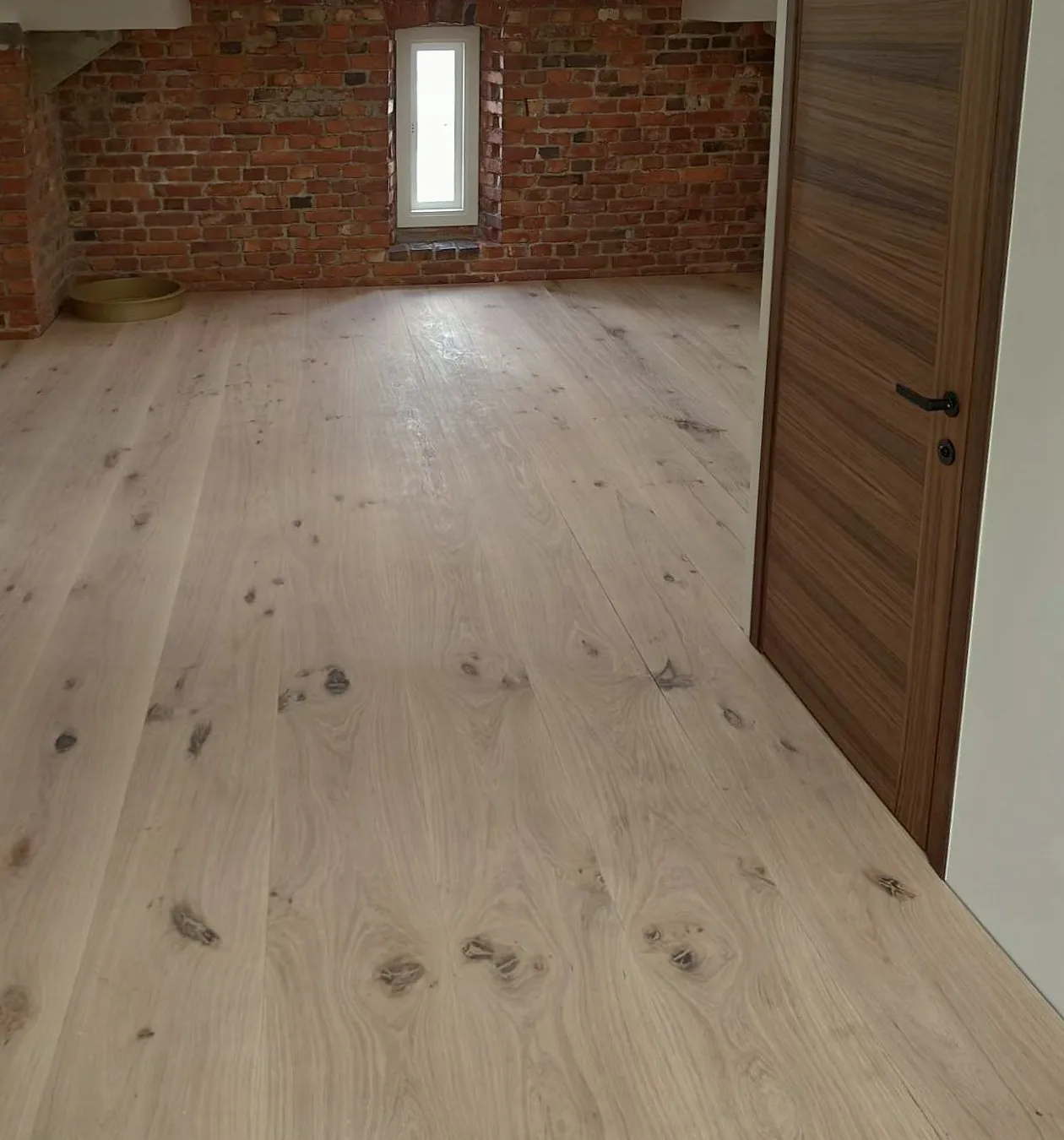
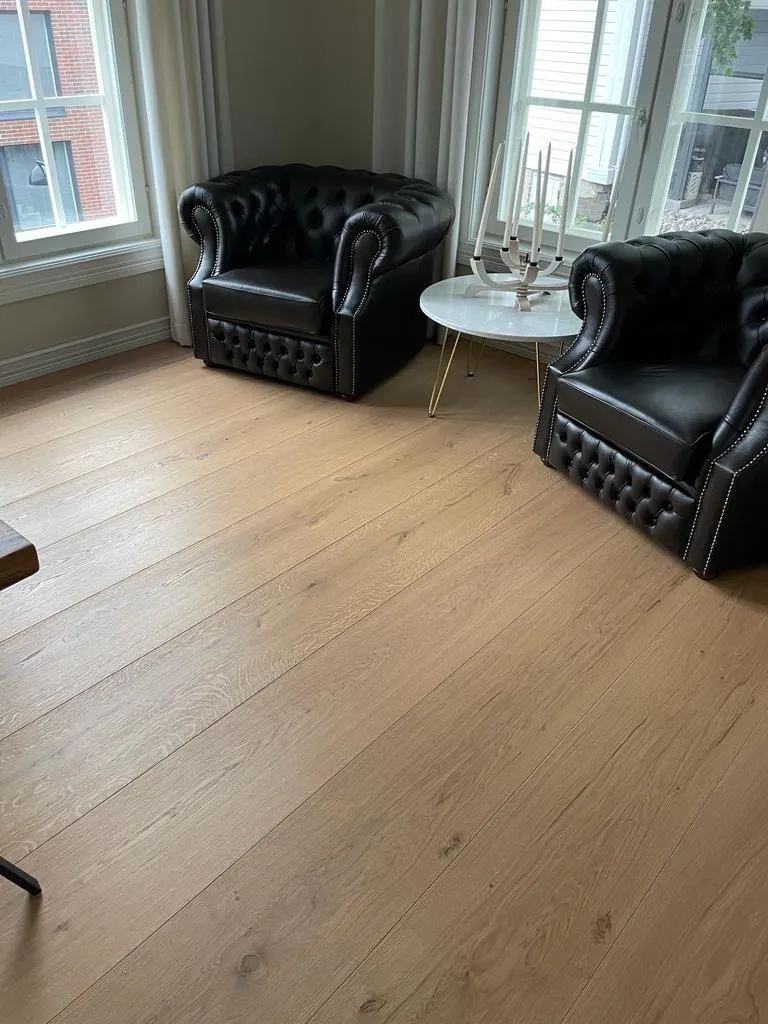
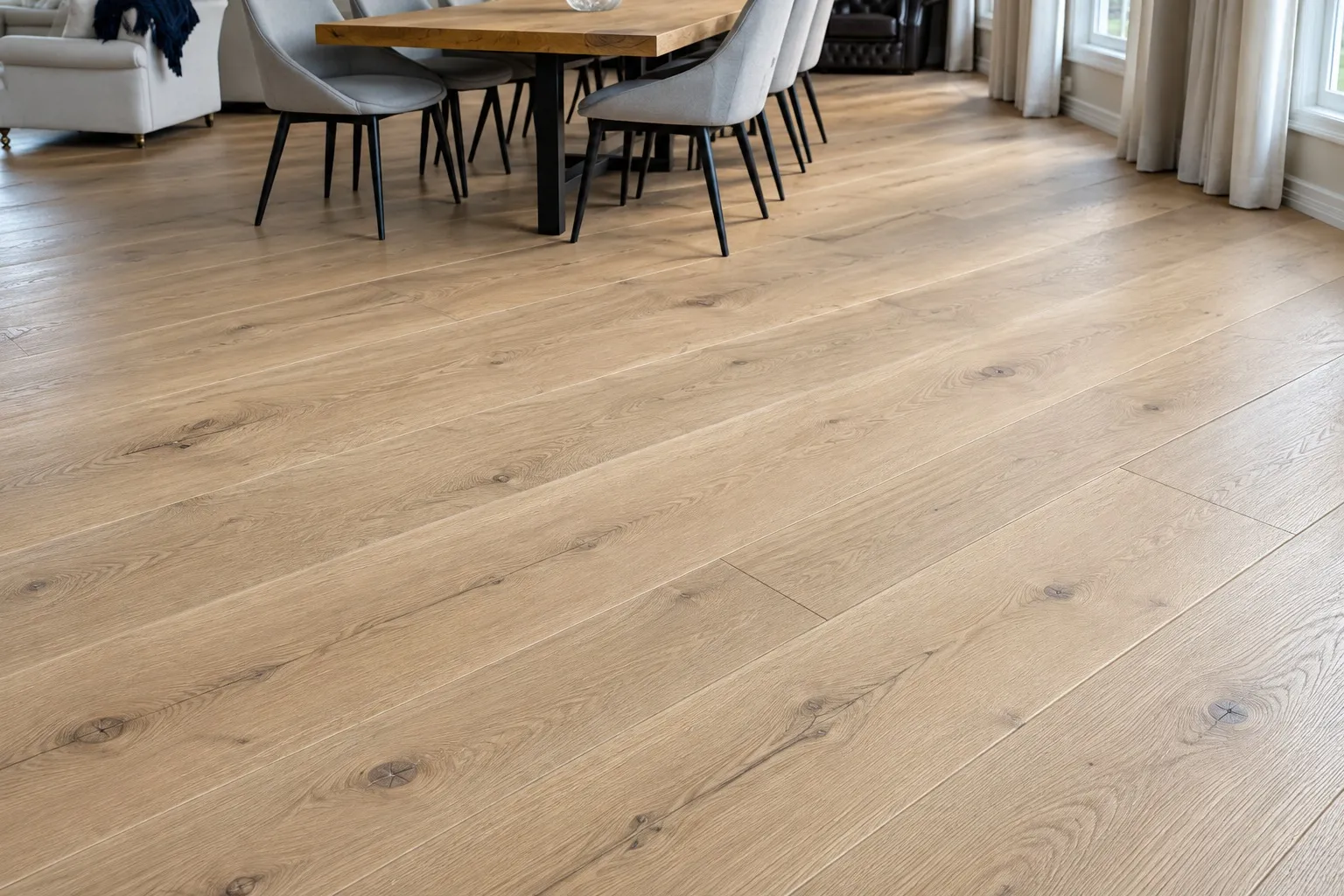
    XXL and plank parquet

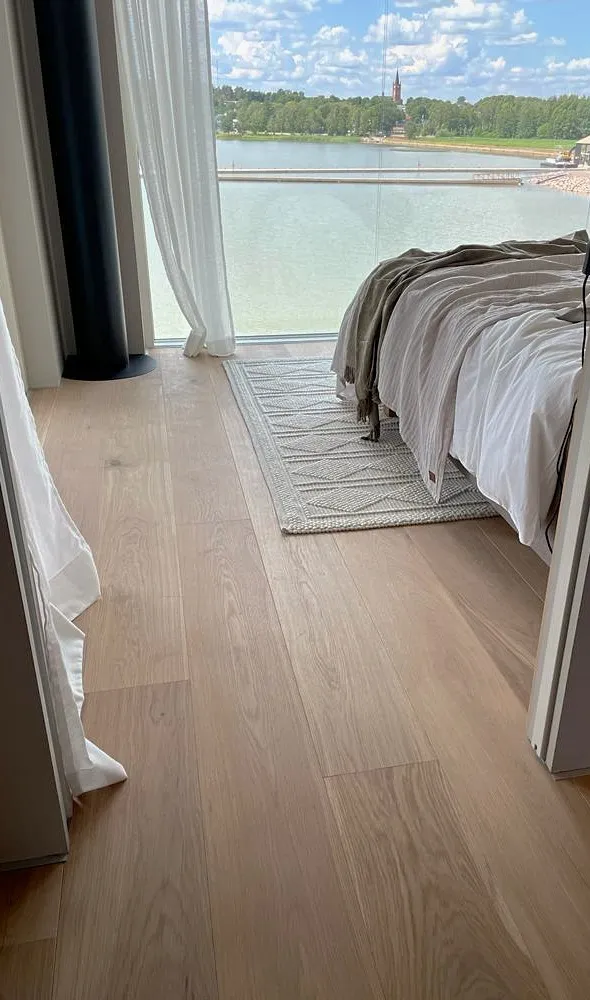
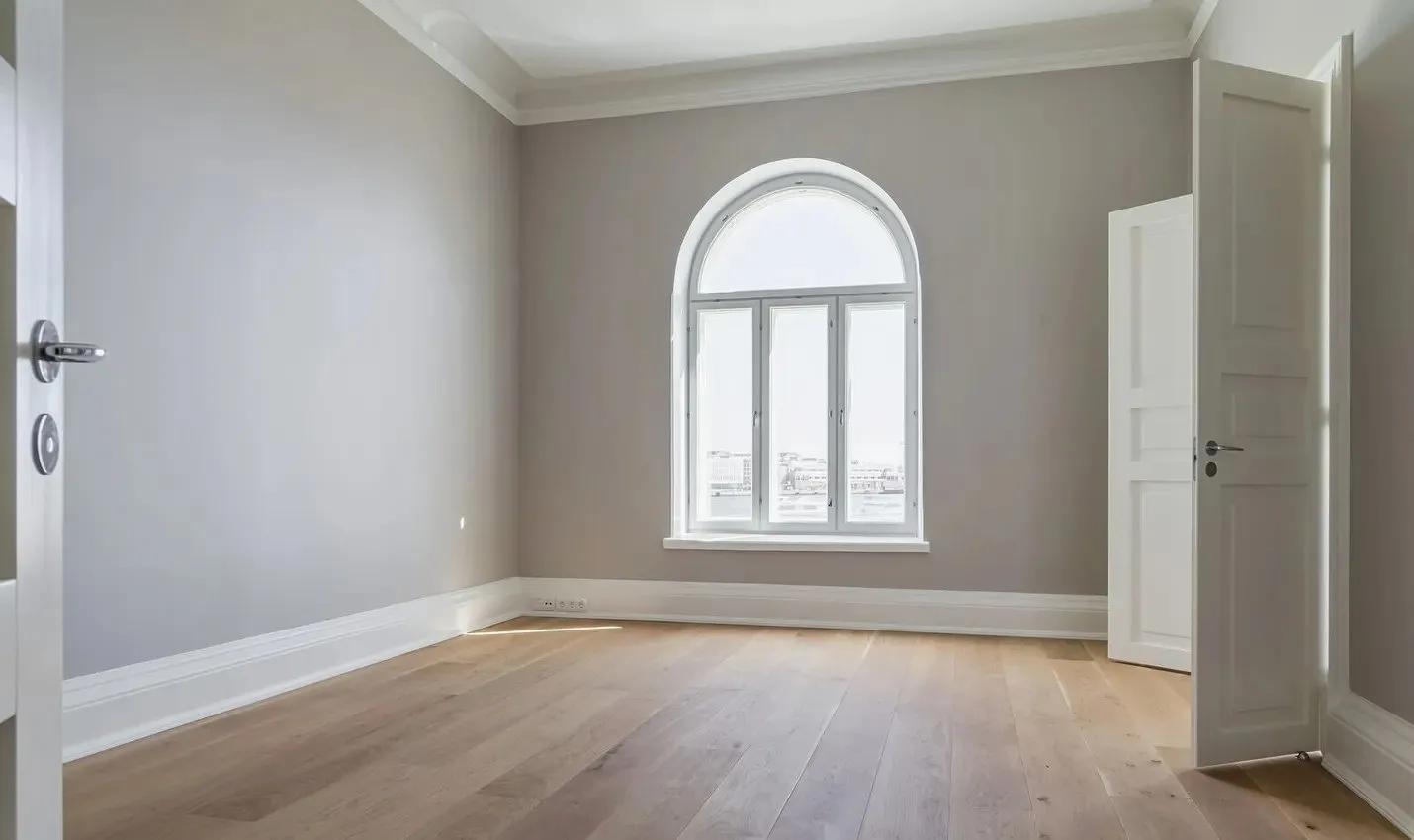
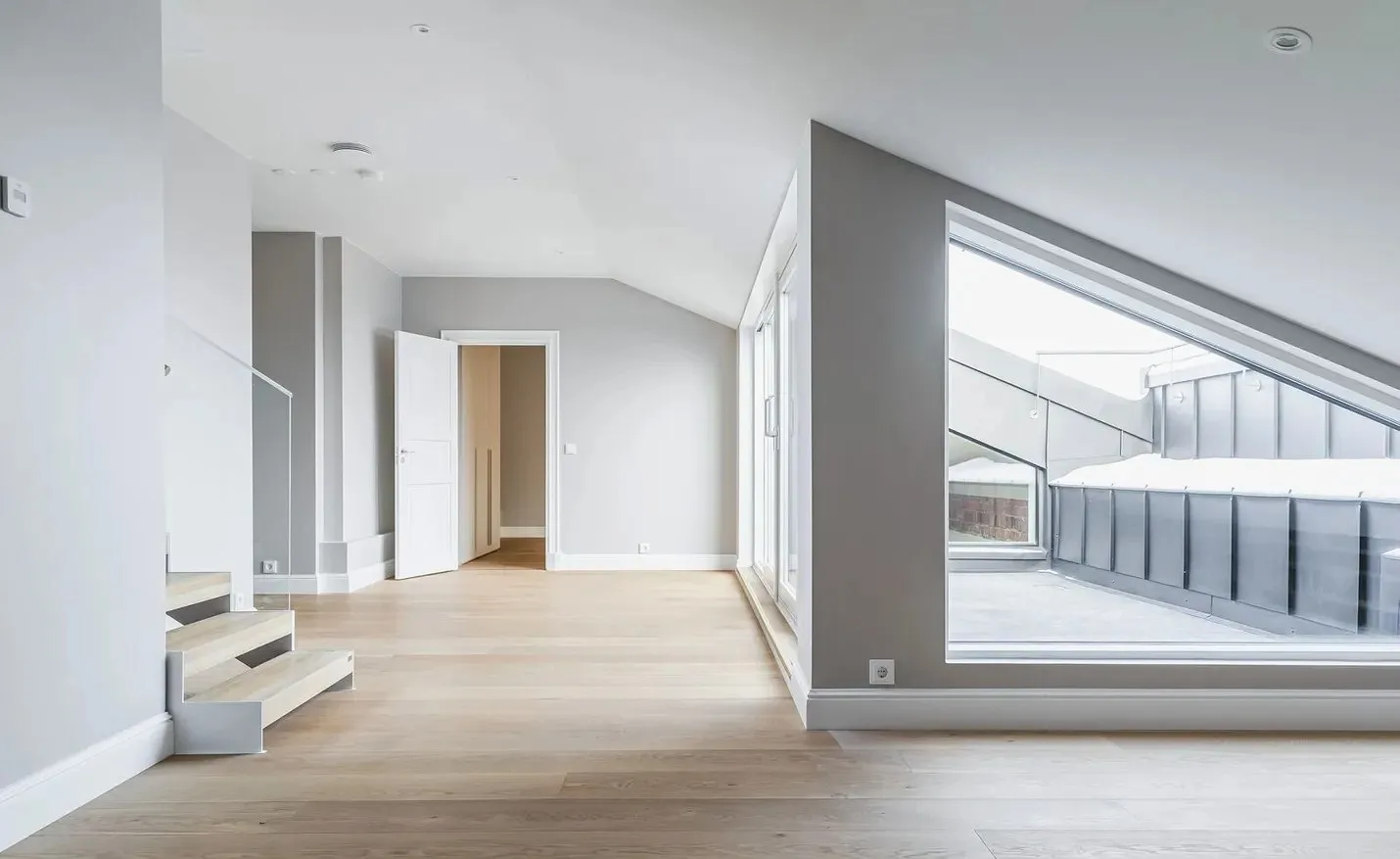
    XXL: 200–400 mm wide, up to 12 m long.
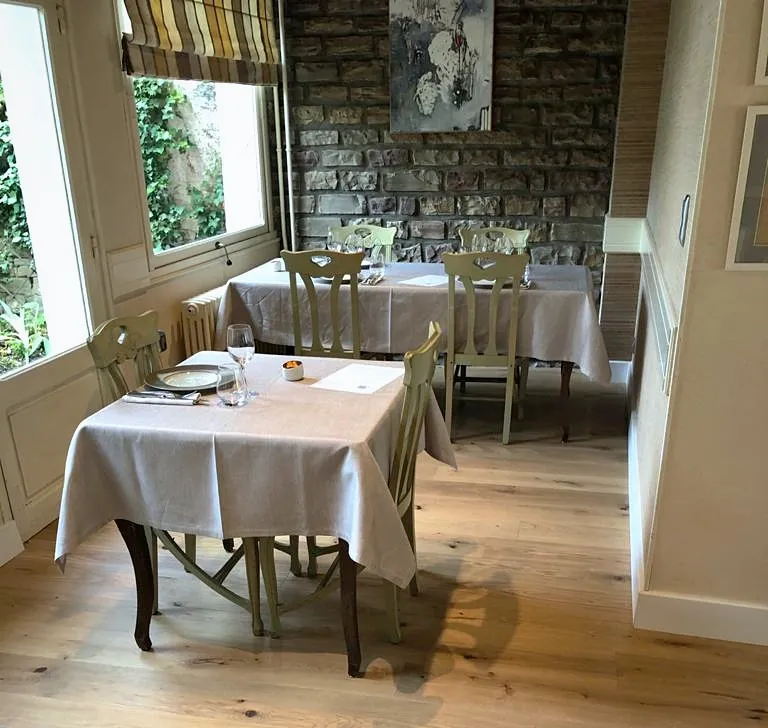
    Plank: 125–300 mm wide, 1,800–3,000 mm long; oak, ash, Douglas fir, birch or pine.

  • Schematic of herringbone parquet Square ends

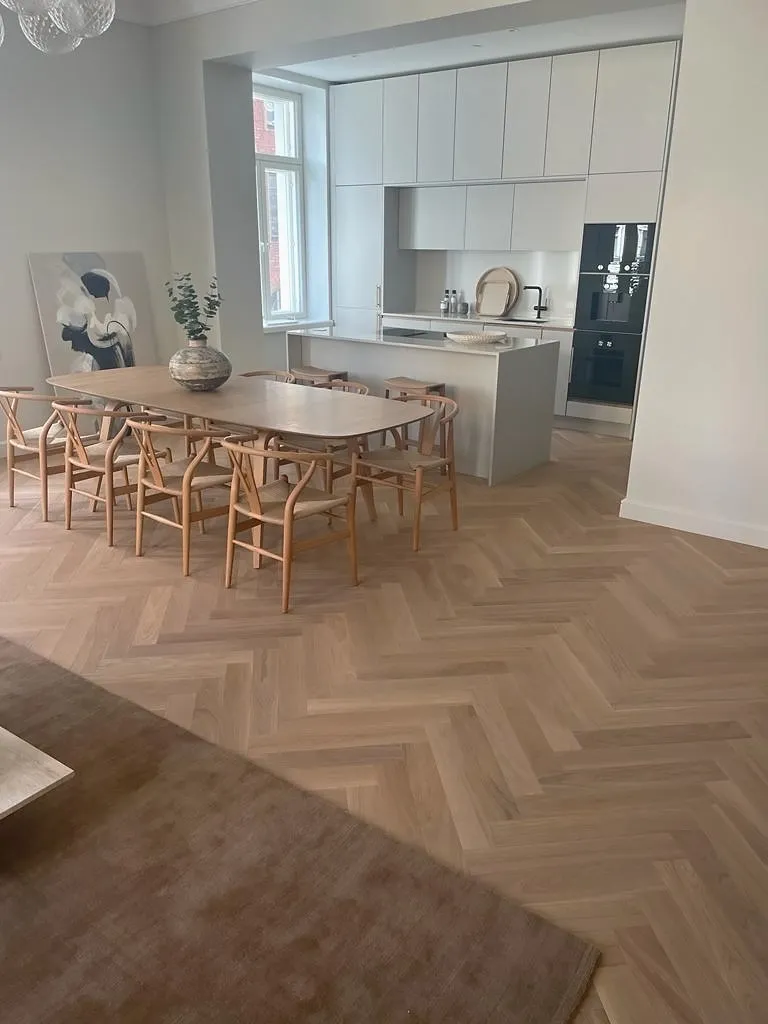
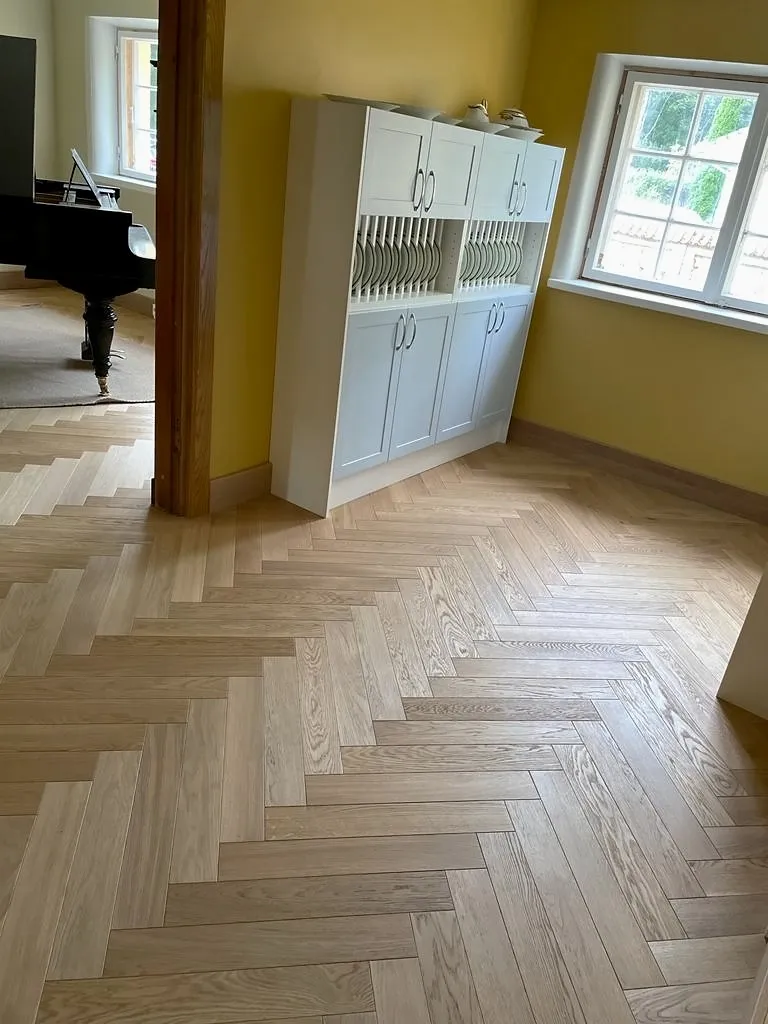
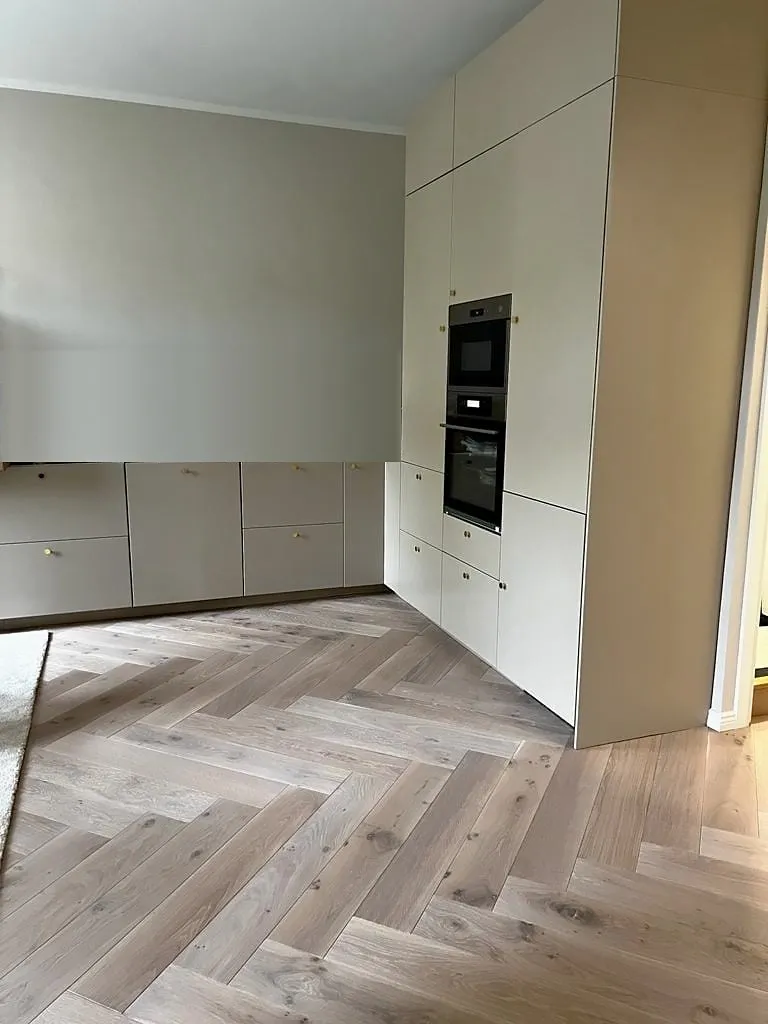
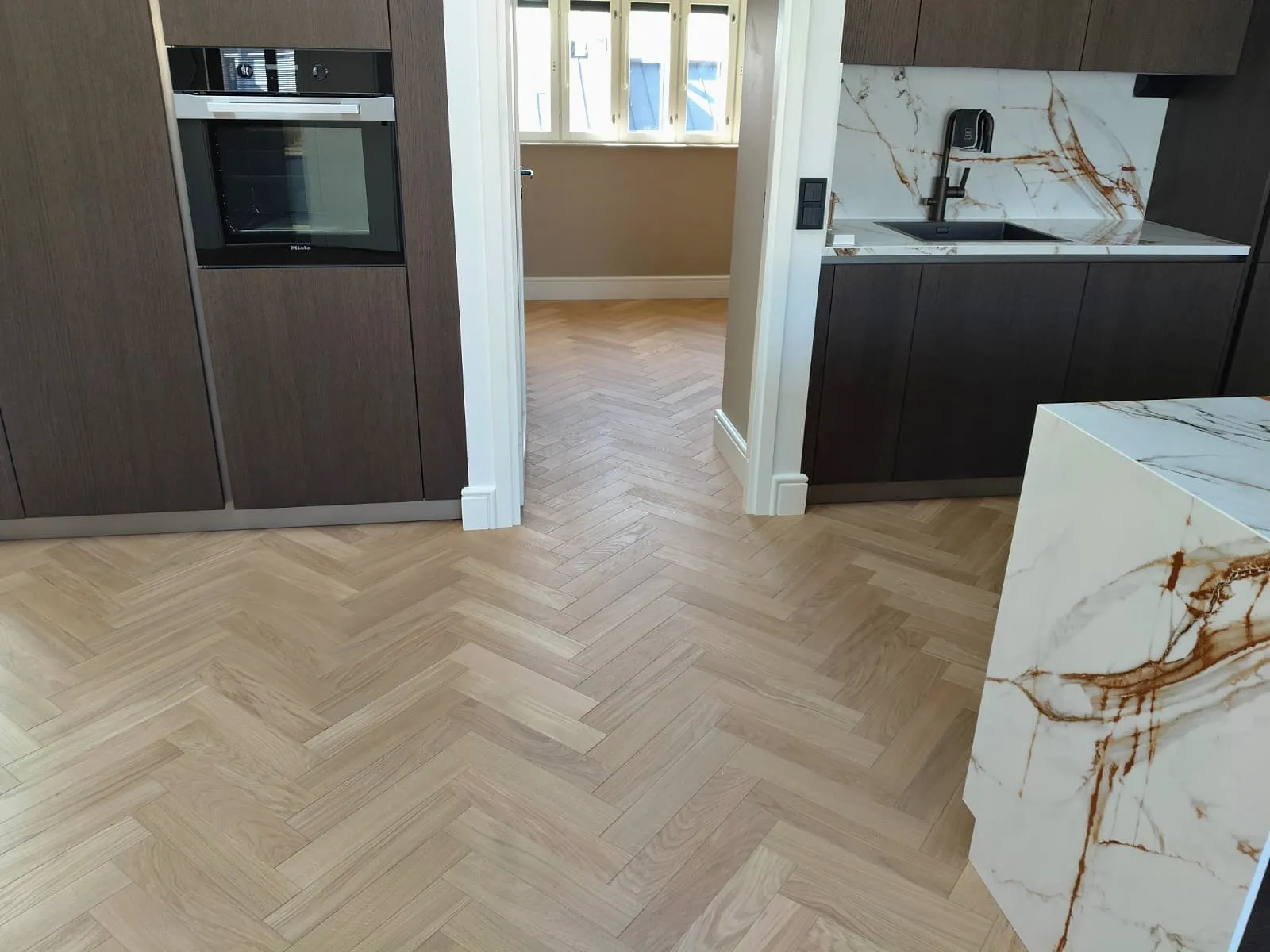
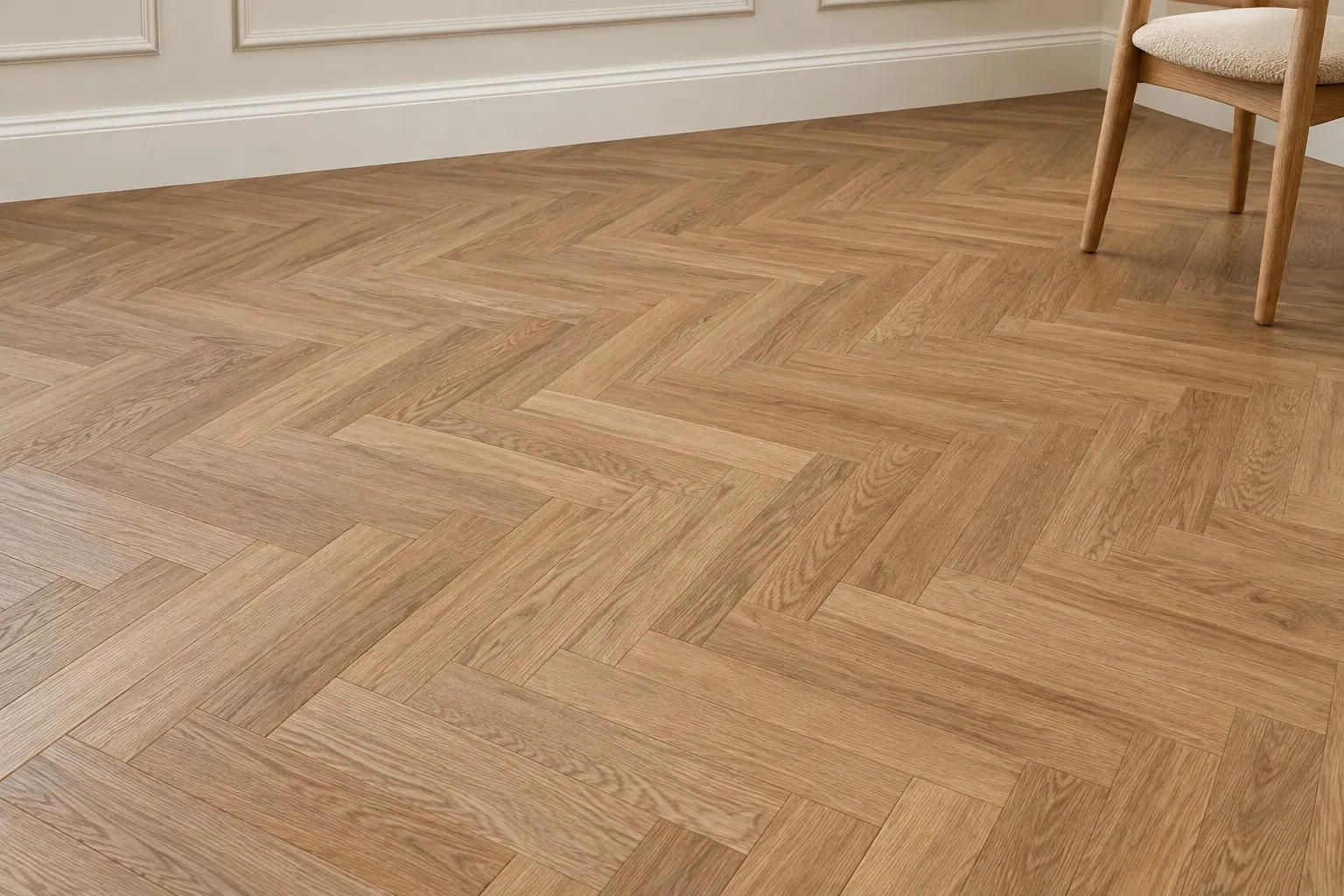
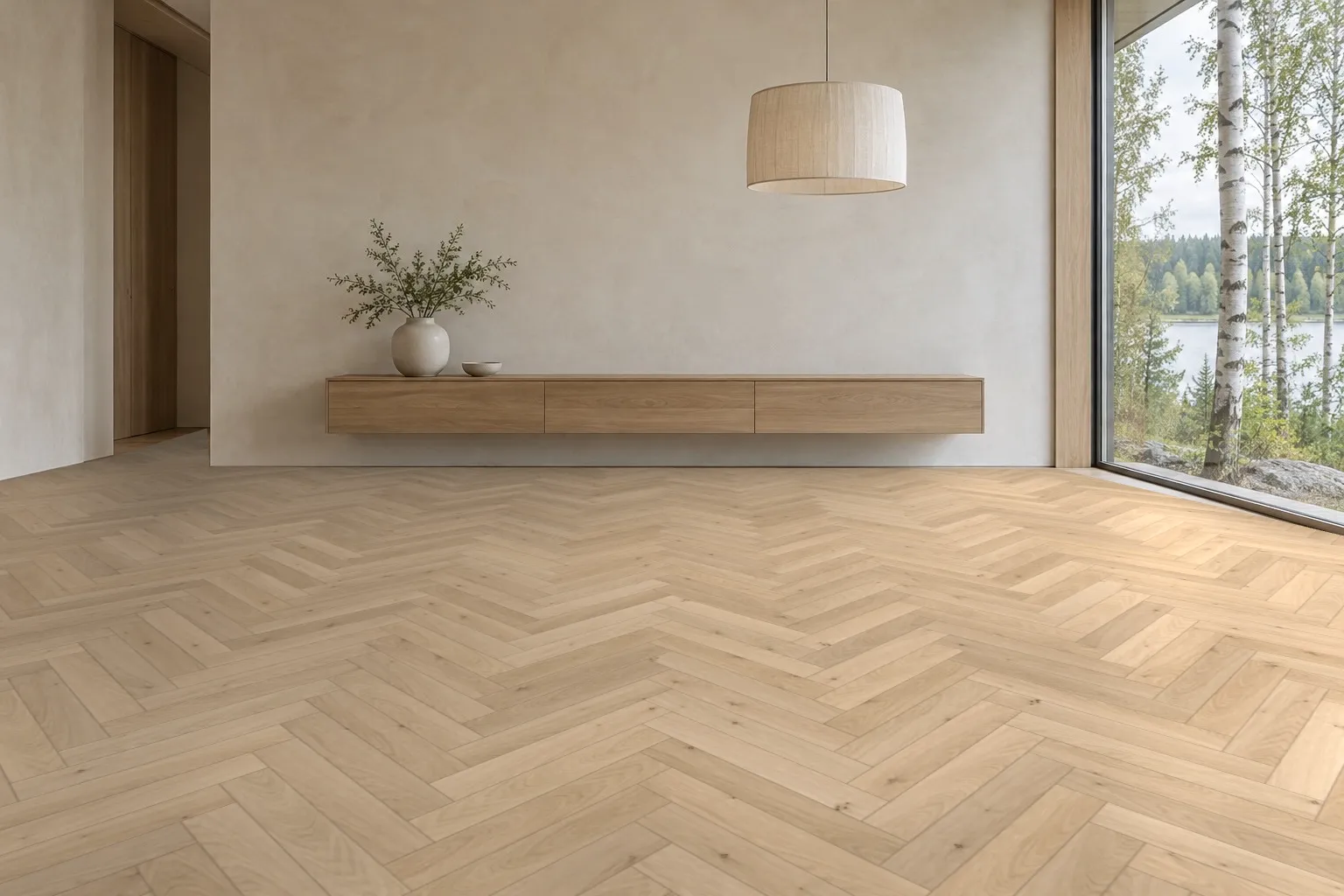
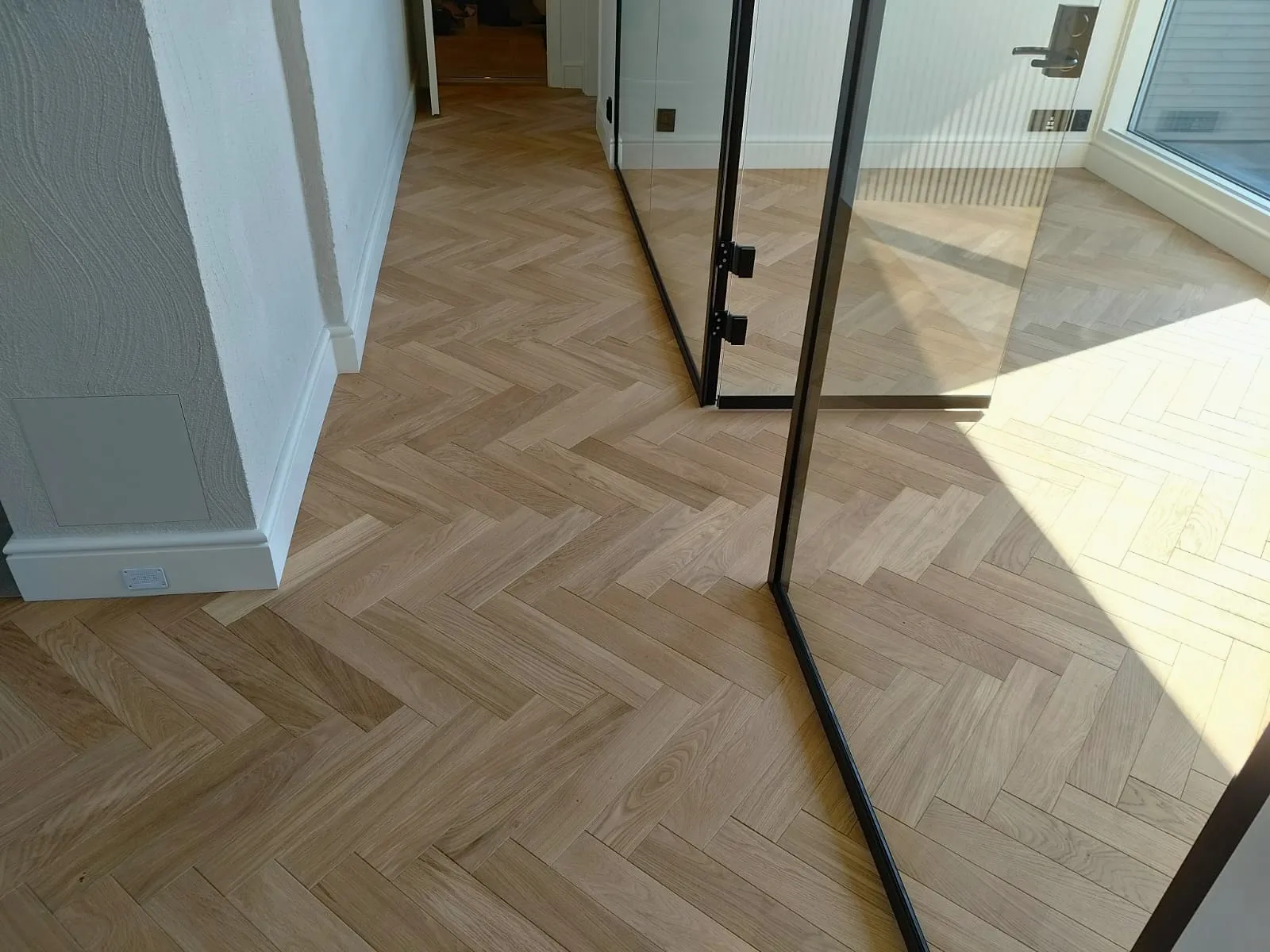
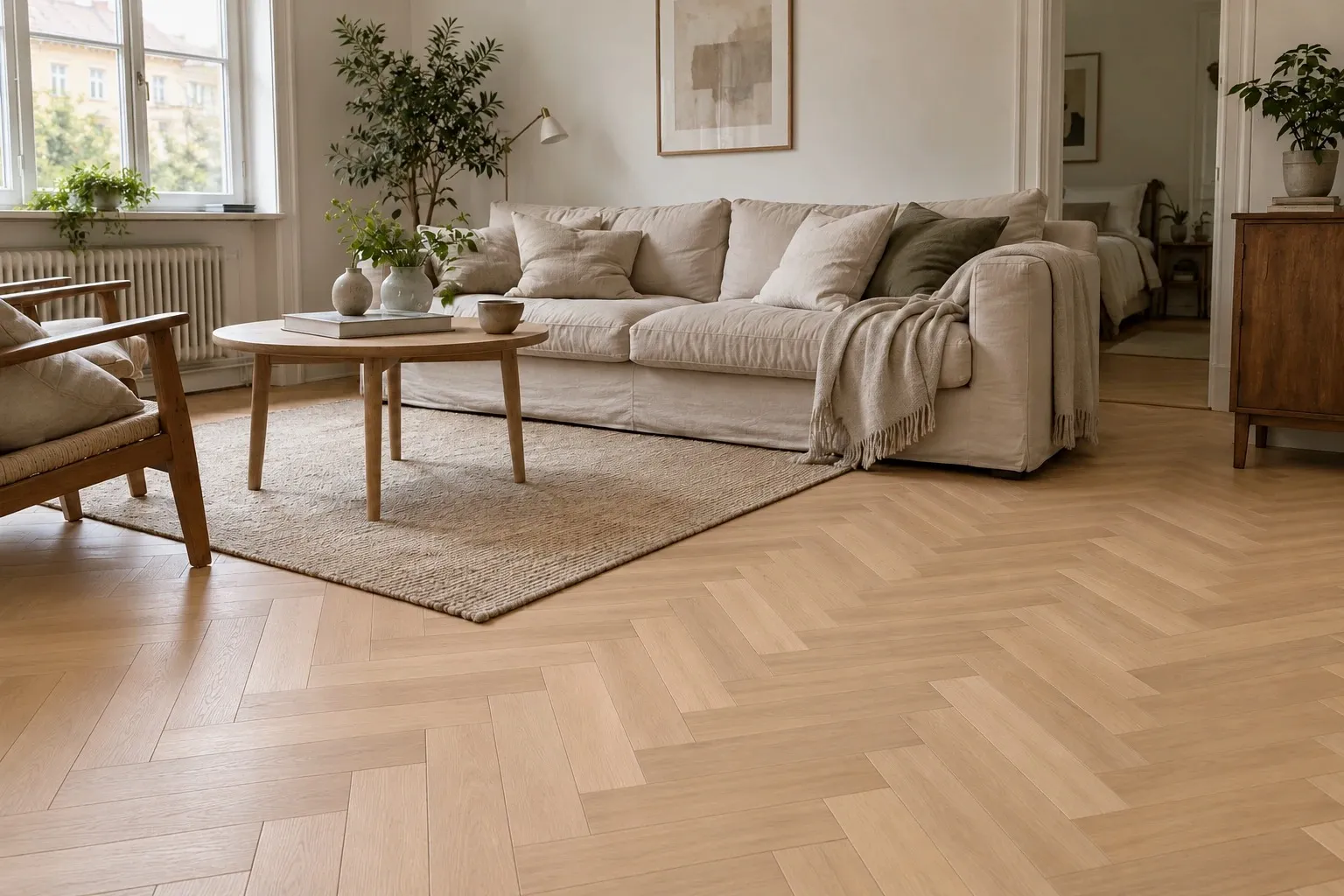
    Herringbone

    The classic zigzag. 80–160 mm wide, 5–7 × width long, 3/4 mm wear layer, 15/16 mm thick.

  • Schematic of chevron parquet Angled ends

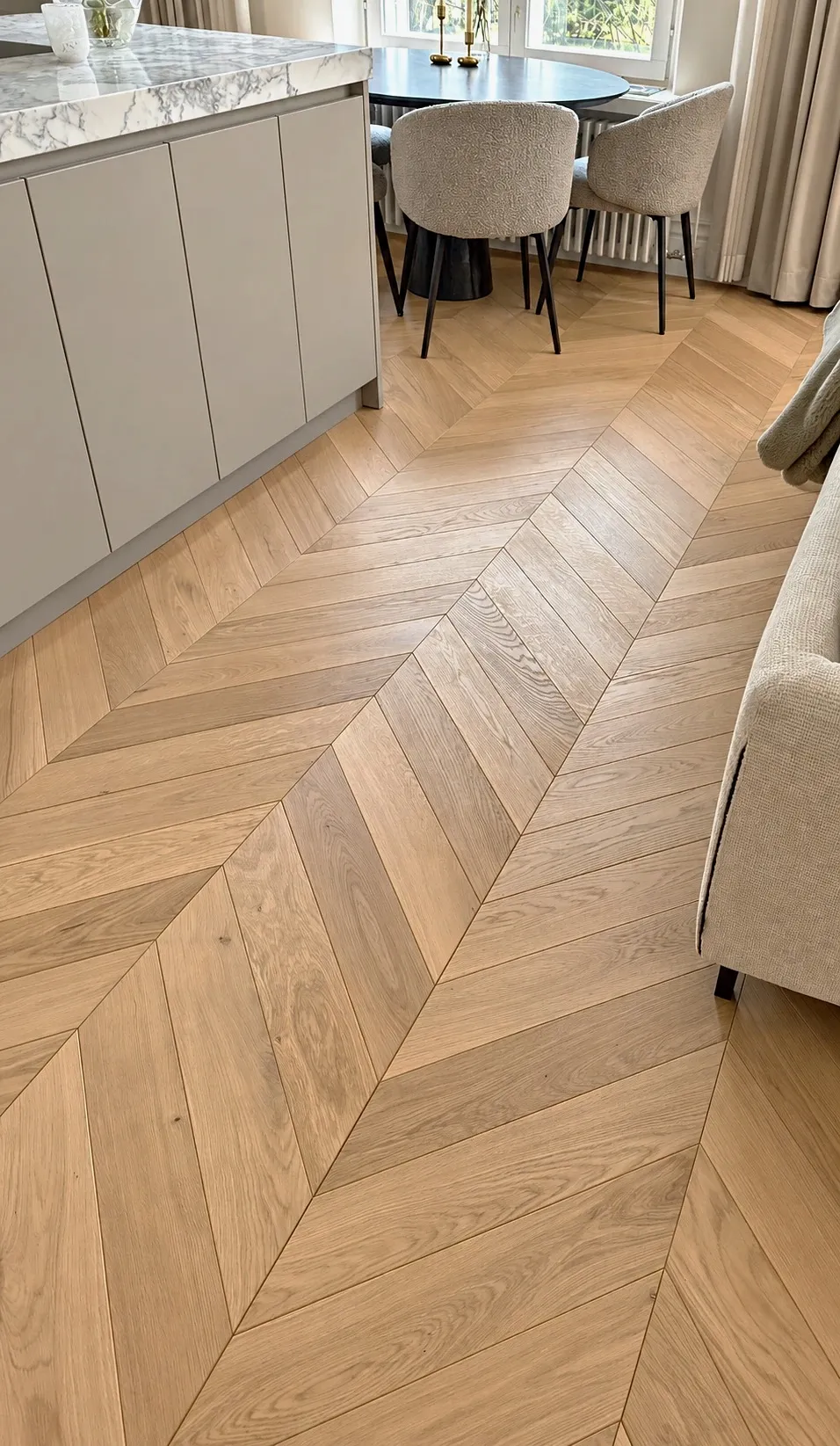
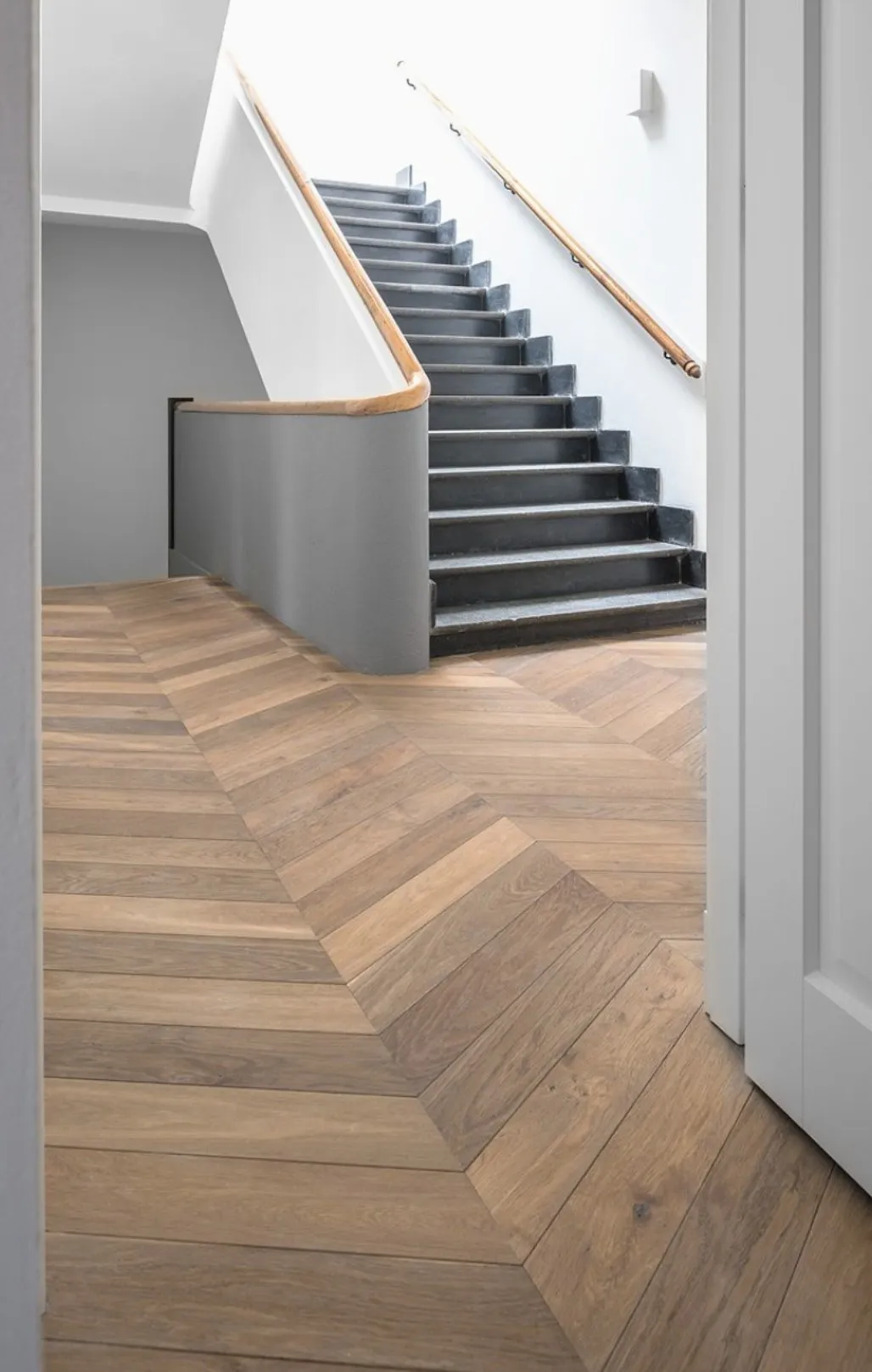
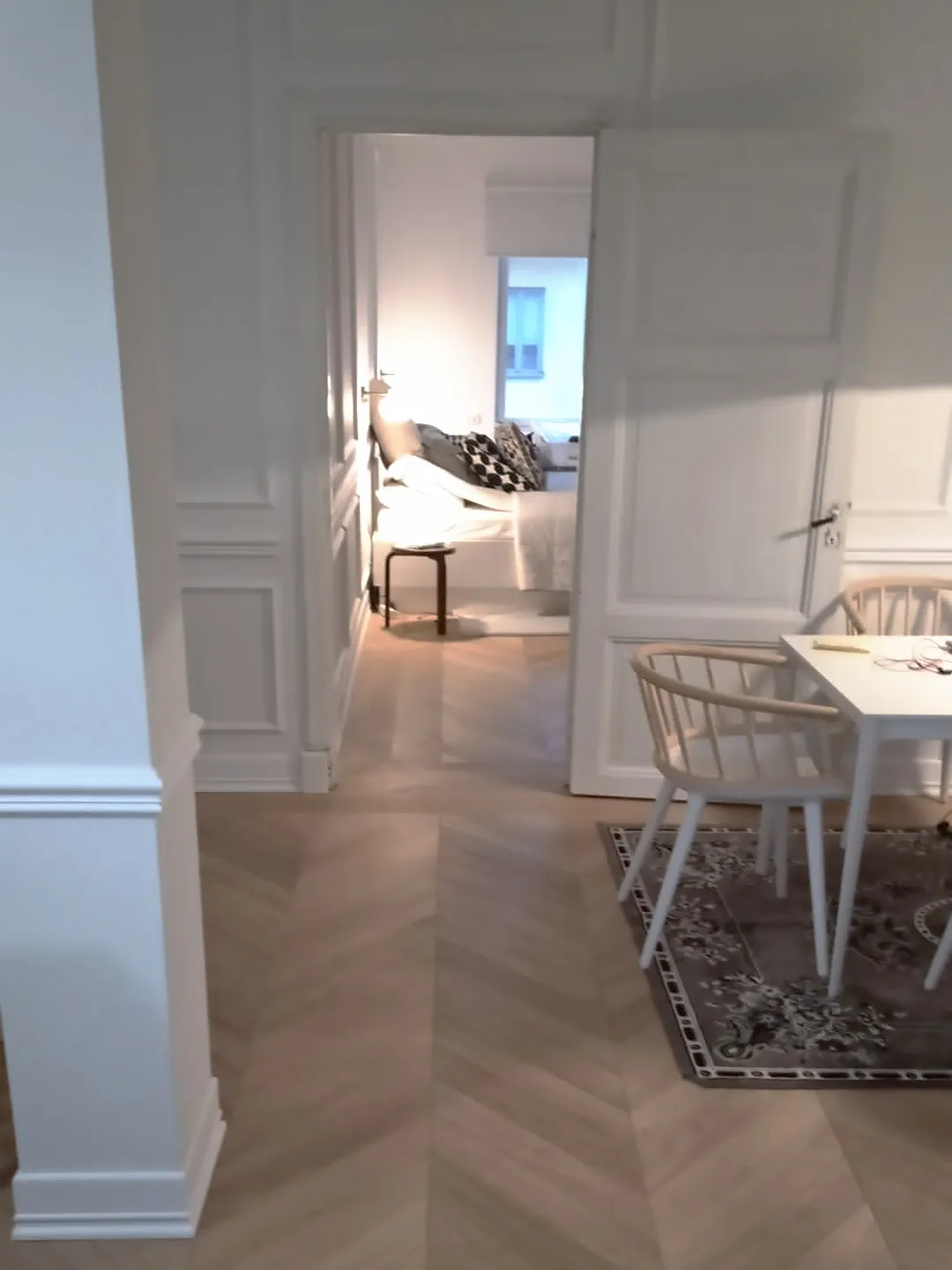
    Chevron

    A continuous arrow pattern that emphasises the length of a room. 100/120 mm wide, 600 mm long, 4 mm wear layer.

  • Schematic of Versailles panels Panel parquet

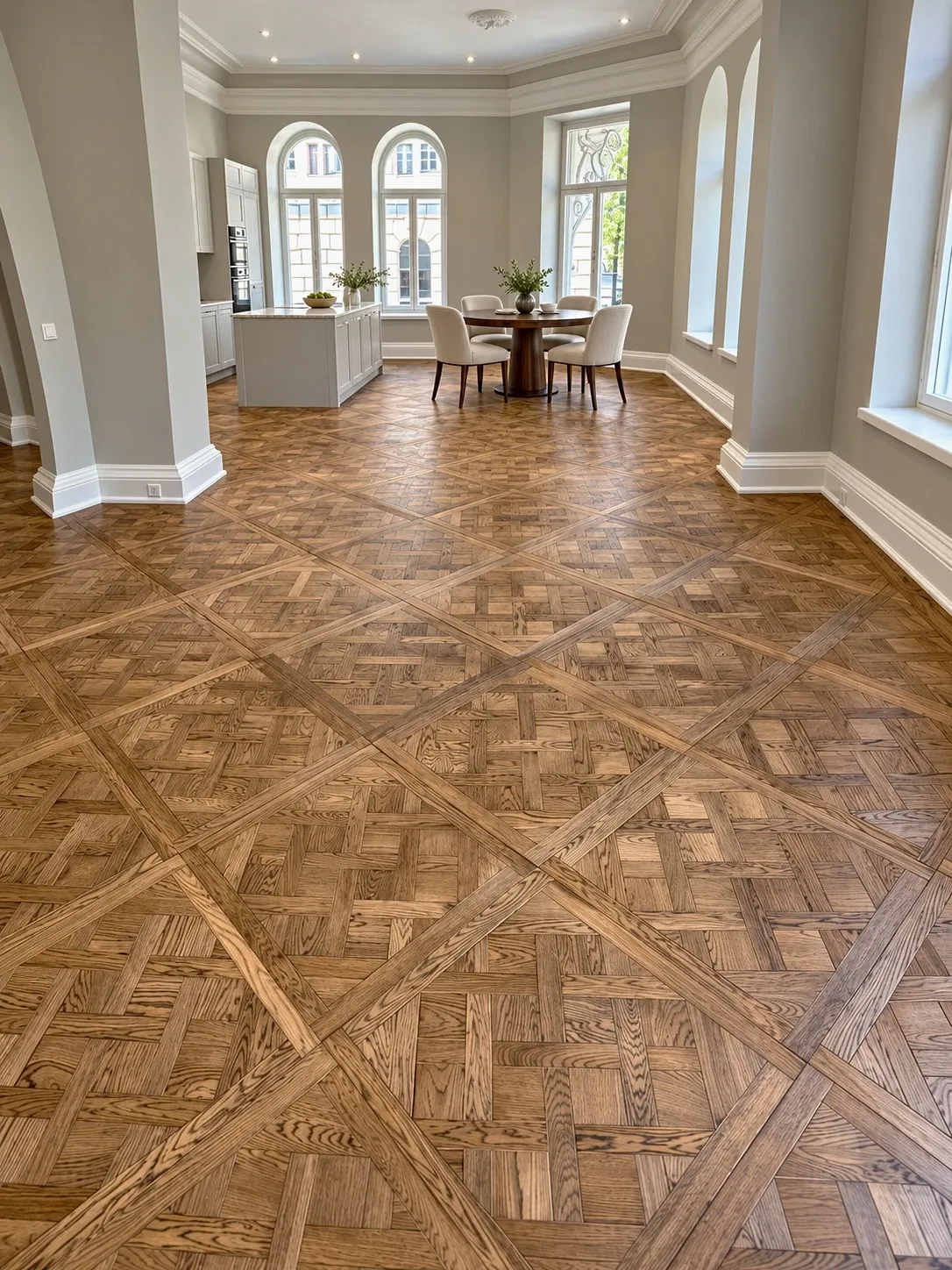
    Versailles panels

    A frame and diagonal lattice in pre-assembled panels: 1,000 × 1,000 mm or 800 × 800 mm, 4 mm wear layer, with or without a bevel.

  • Schematic of square parquet Square parquet

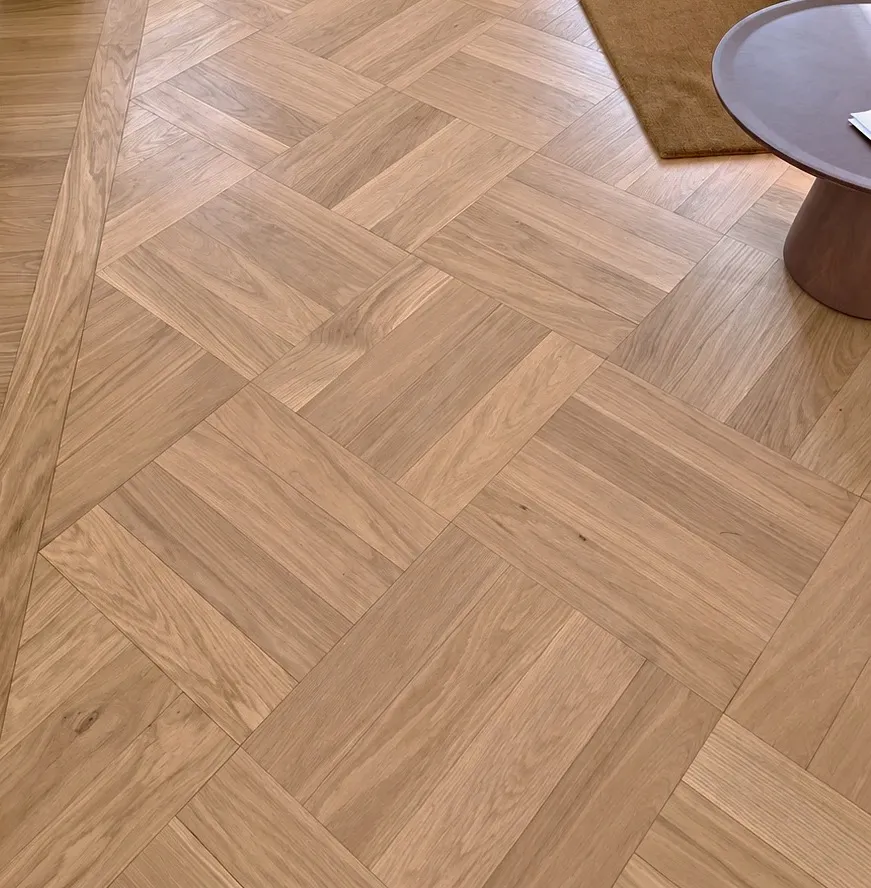
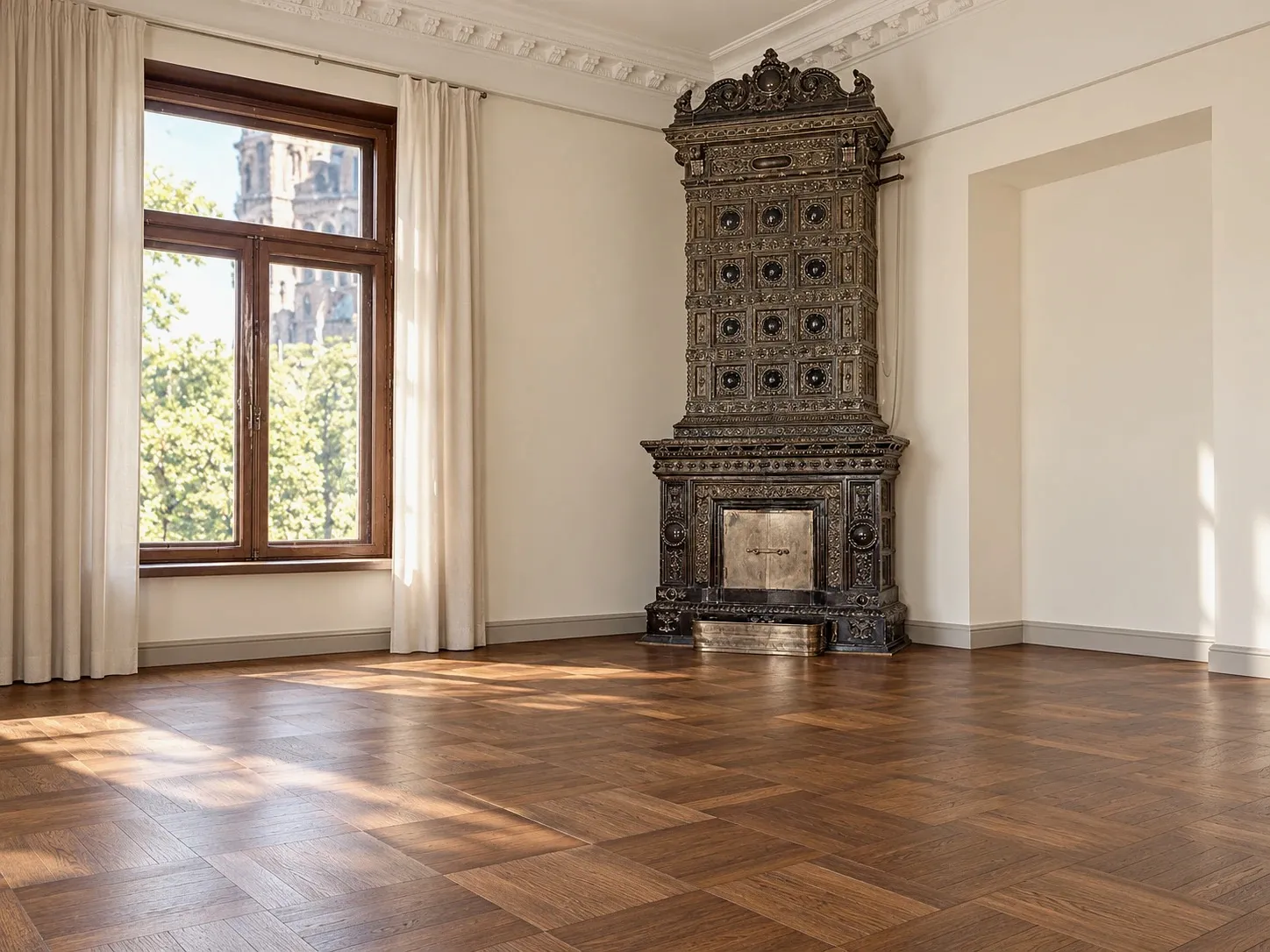
    Töölö and Norrmen square

    A calm square pattern — as Norrmen square, laid at 45 degrees inside a border frieze. Squares 300 × 300 or 400 × 400 mm, 4 mm wear layer.

02 / Wood through and through

Solid parquet. Many expressions.

Every element is solid wood throughout. Format, cut and laying pattern create different surfaces: from fine mosaics to the visible growth rings of end grain.

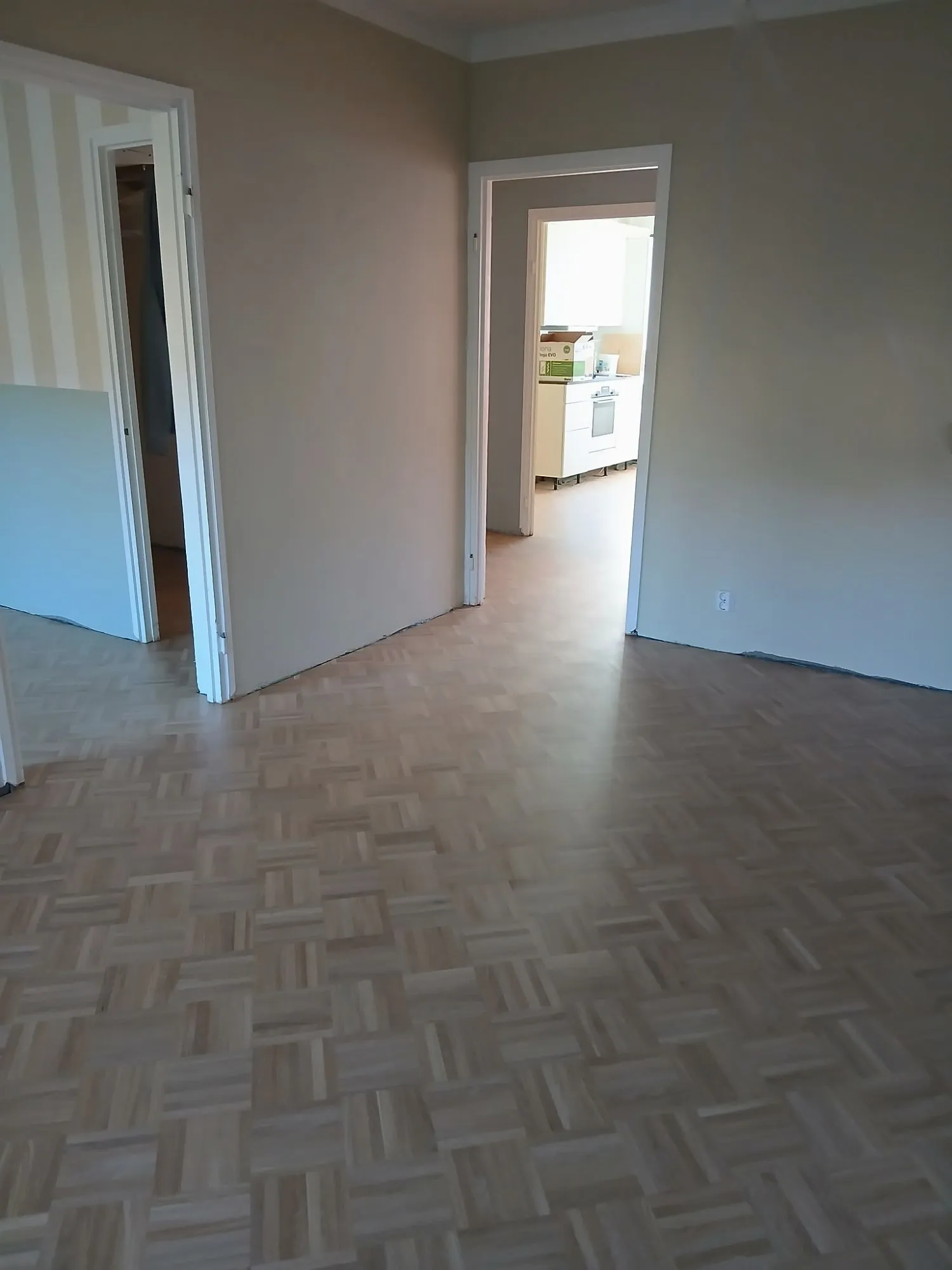
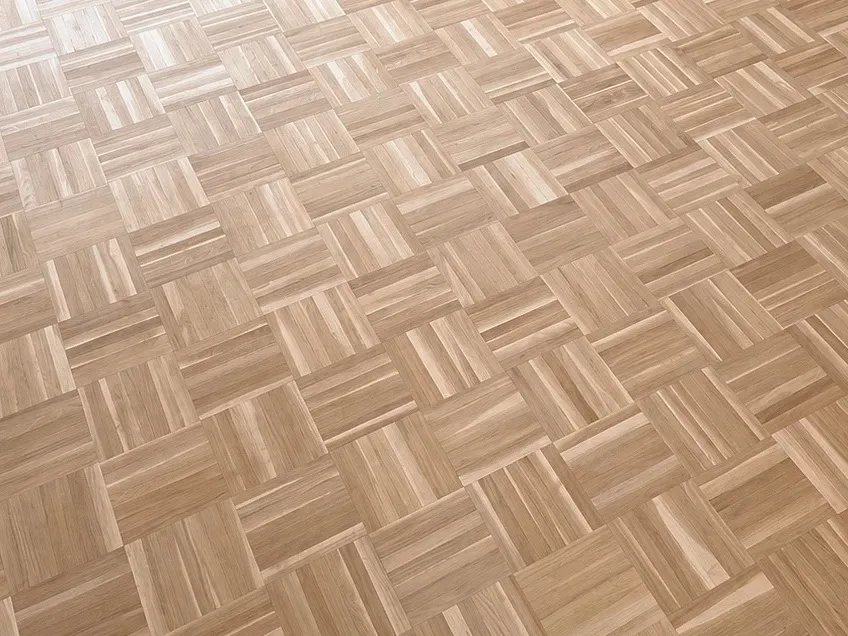
Schematic top view of mosaic parquet in a basket pattern Solid lamellas

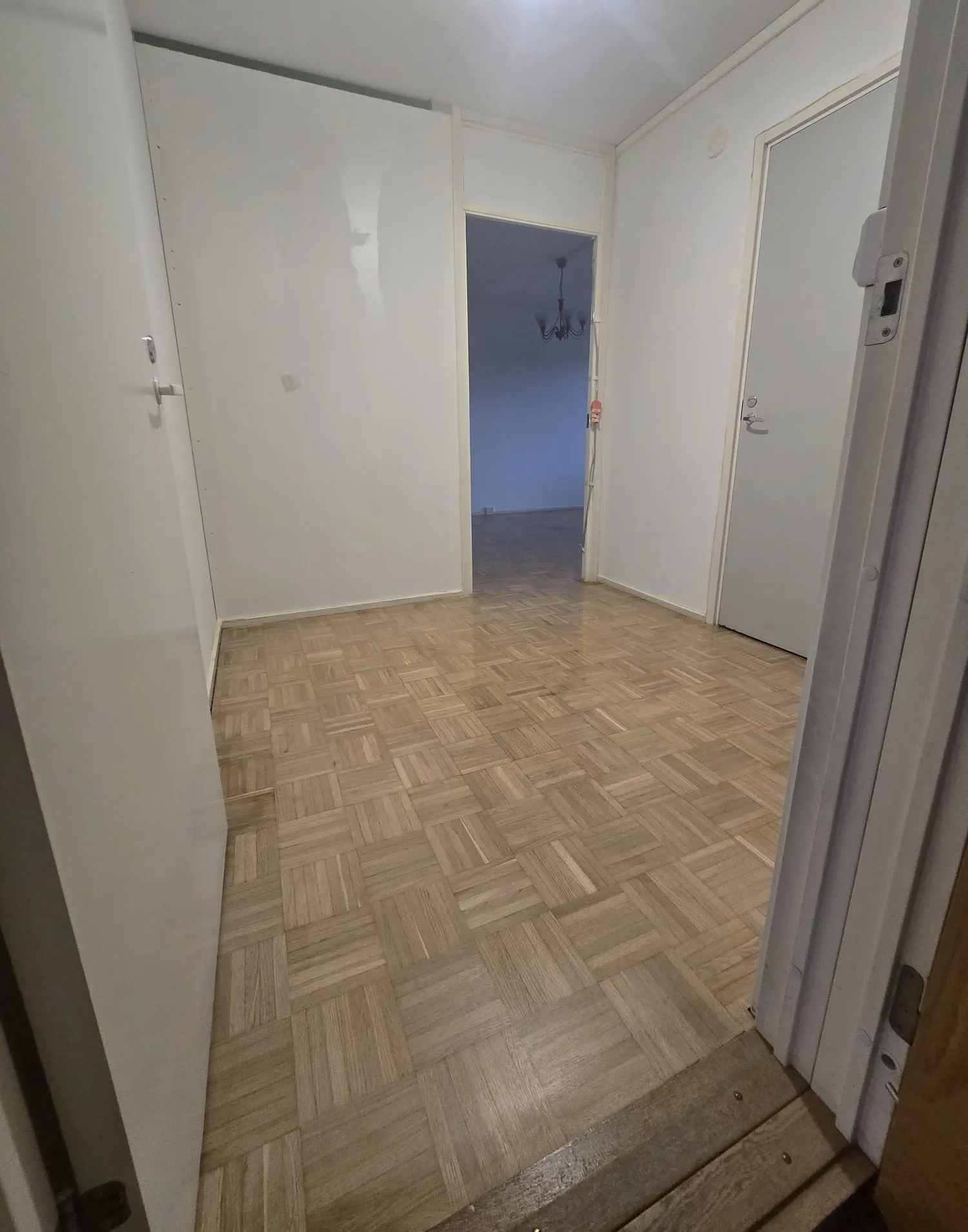
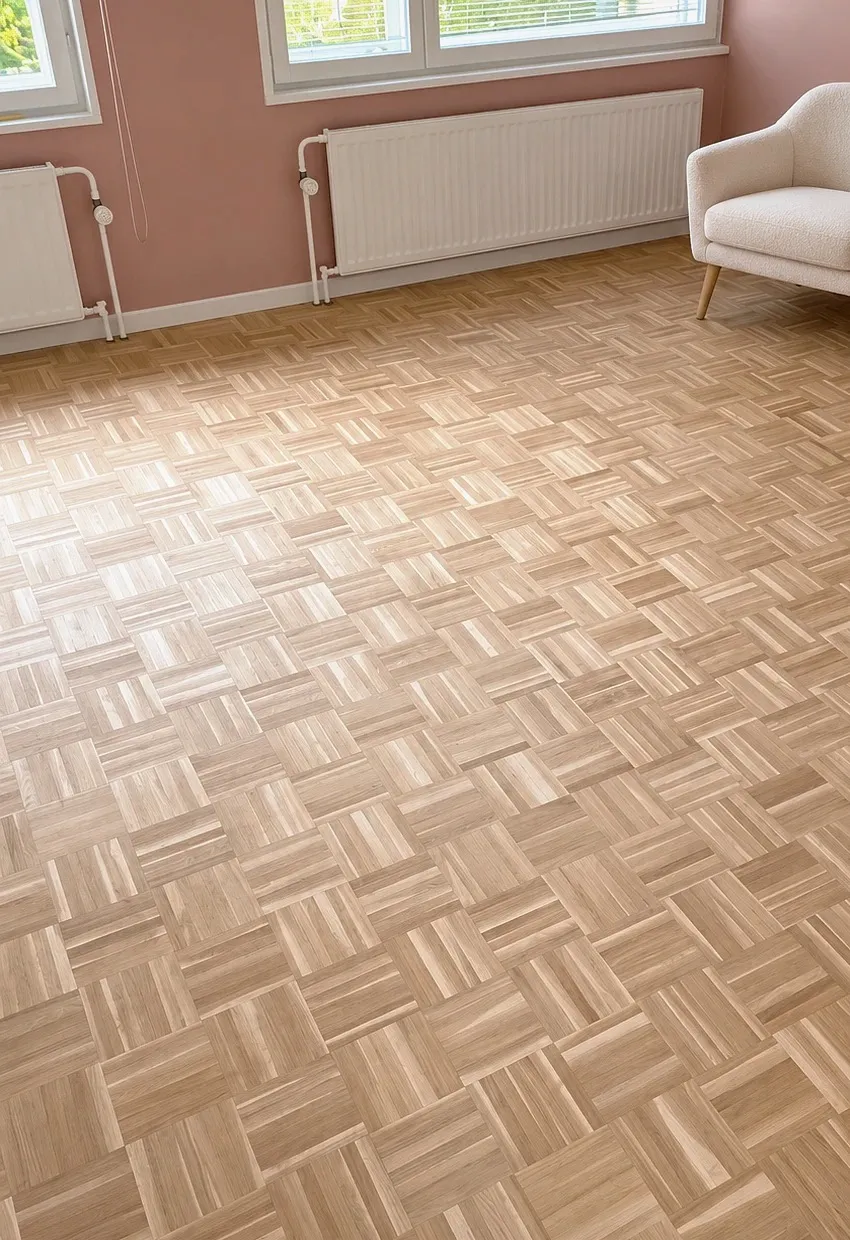
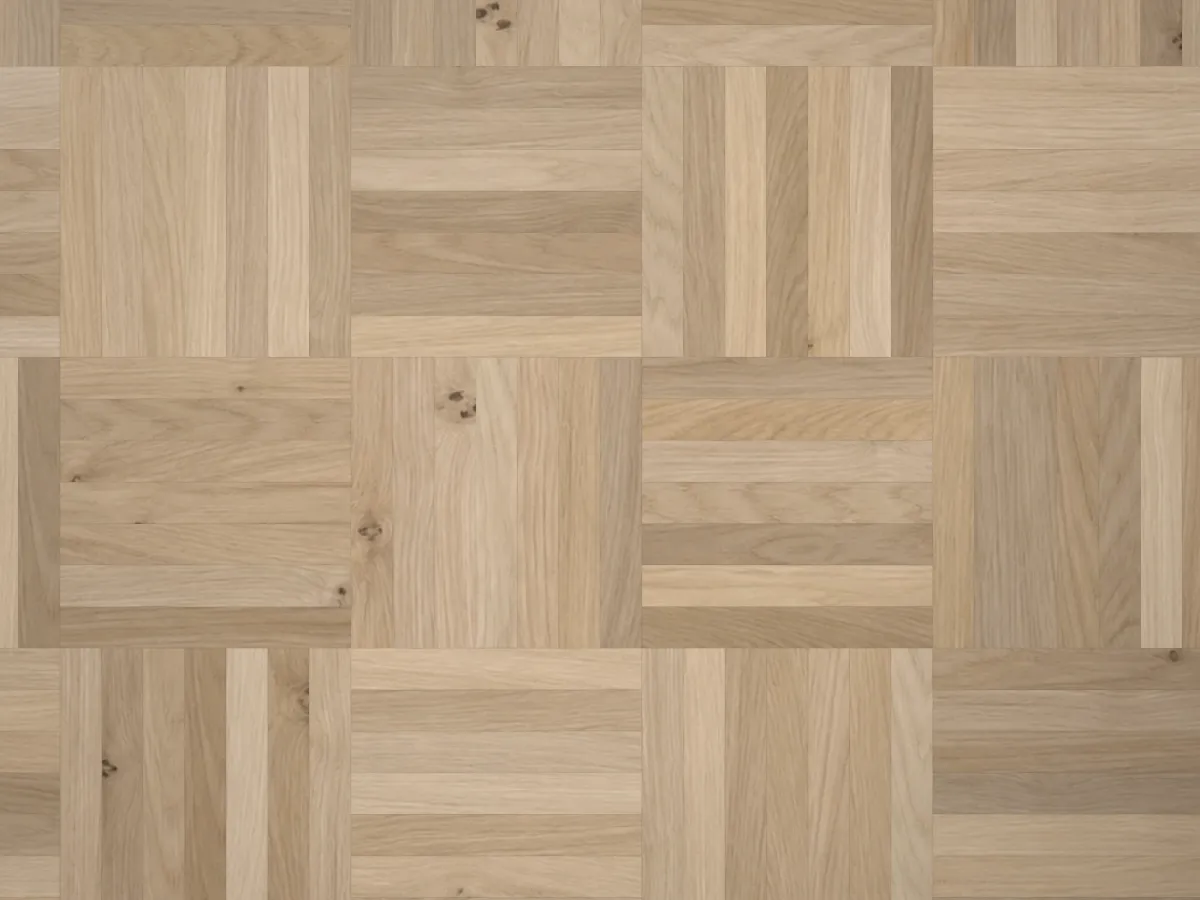
Mosaic parquet

Small solid wood lamellas are arranged into patterns. In the classic basket pattern their direction alternates. Depending on the product, other laying patterns are possible too.

Construction
Solid wood lamellas
Typical thickness
8 mm, strips 22.86 × 160 mm
Pattern
Cube, parallel or English bond
Character
Finely detailed and geometric
Schematic top view of Töölö square parquet with two wide elements per square A Helsinki classic

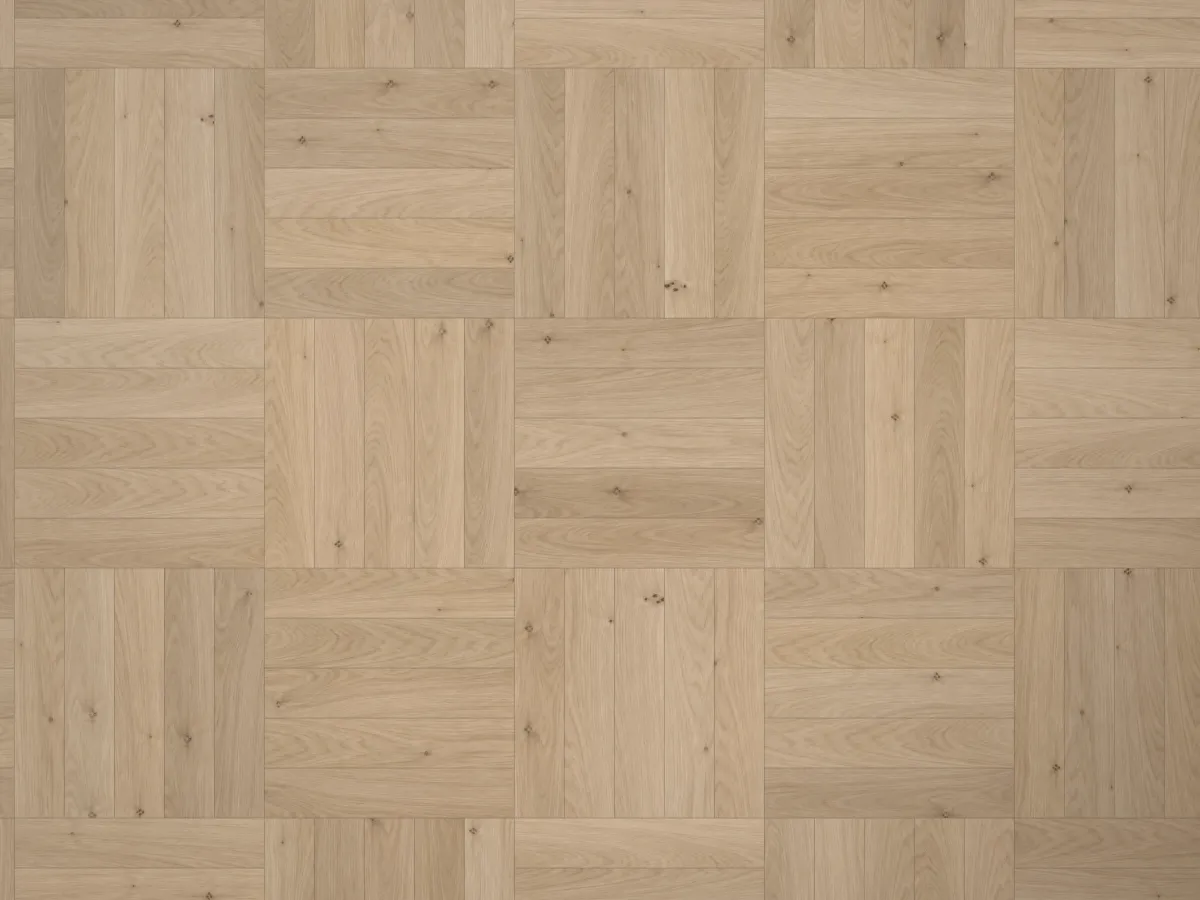
Töölö square

Solid elements form a calm square pattern with alternating grain direction. The traditional version is best known from old Helsinki apartments. Laid on the diagonal and framed by a border frieze, it becomes the Norrmen square.

Construction
Solid elements in the traditional style
Typical thickness
About 10 mm, depending on the product
Character
A generous, clear square pattern
Schematic top view of solid planks with lengthwise grain From a single piece of wood

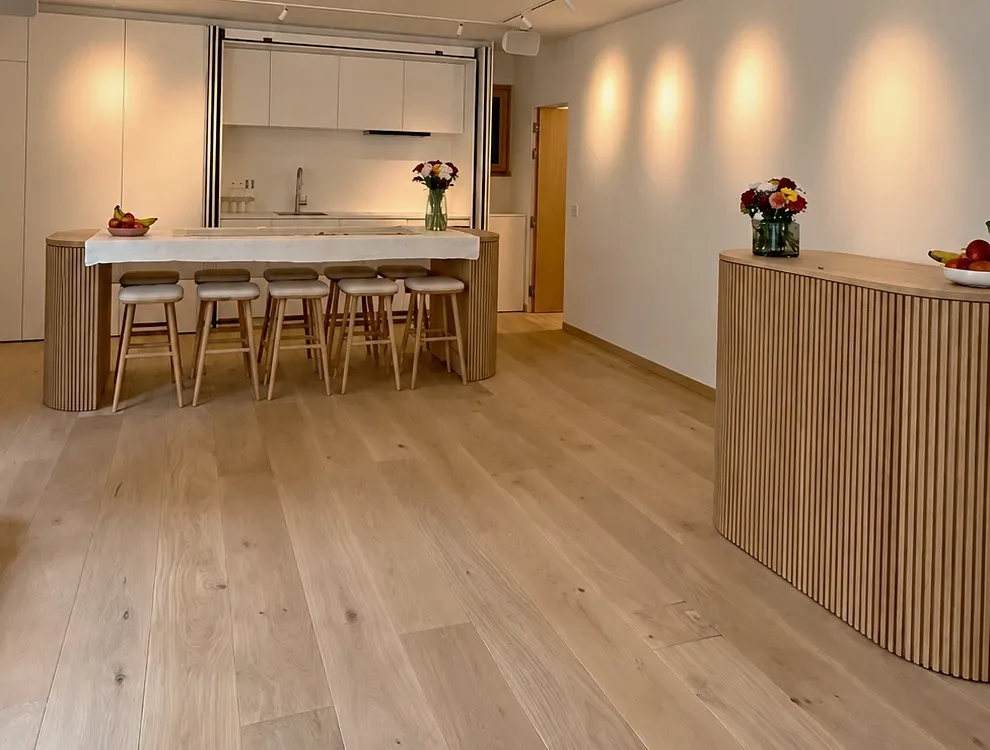
Solid plank

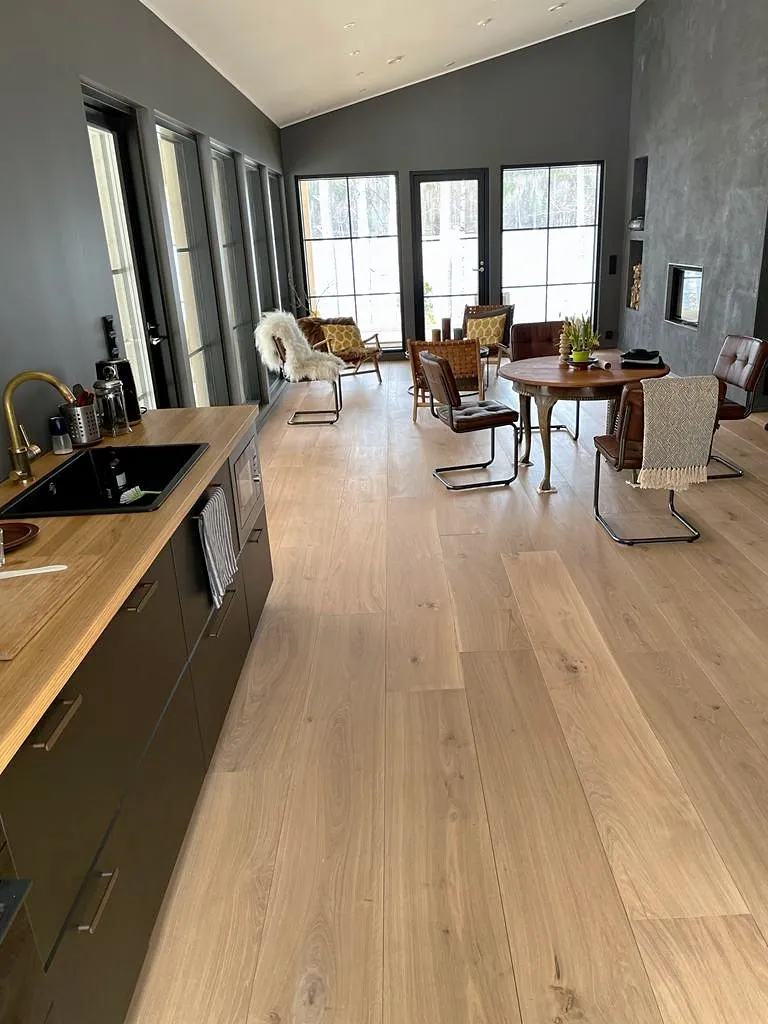
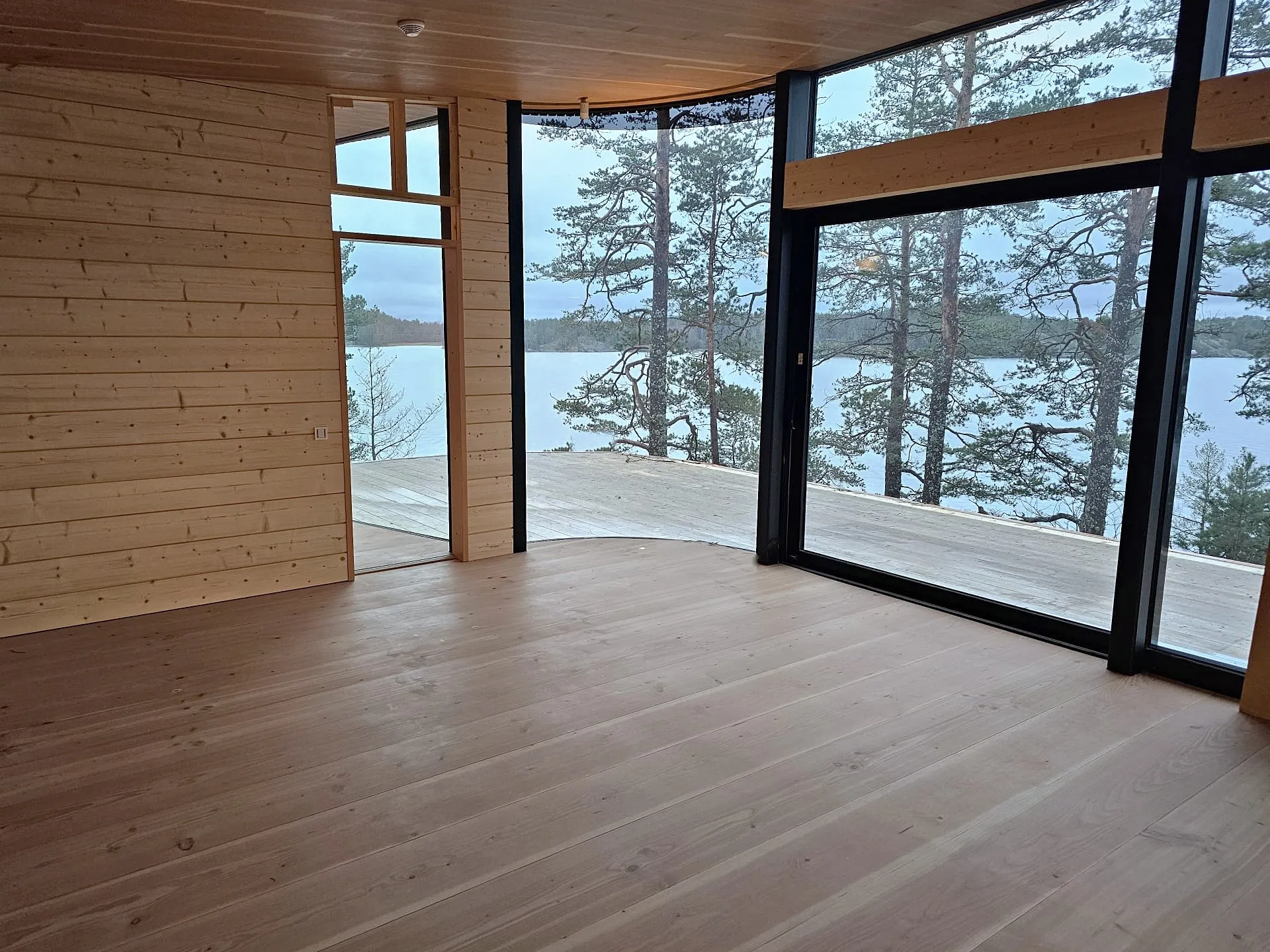
Each plank is a single piece of solid wood. The generous format brings out the natural grain and creates a calm, continuous floor.

Construction
Solid wood throughout, with no separate backing
Example thicknesses
15 mm or 20 mm, depending on the product
Character
Generous planks with natural grain
Plank parquet – OakSee a finished floor
Schematic top view of end grain with visible growth rings Wood block paving

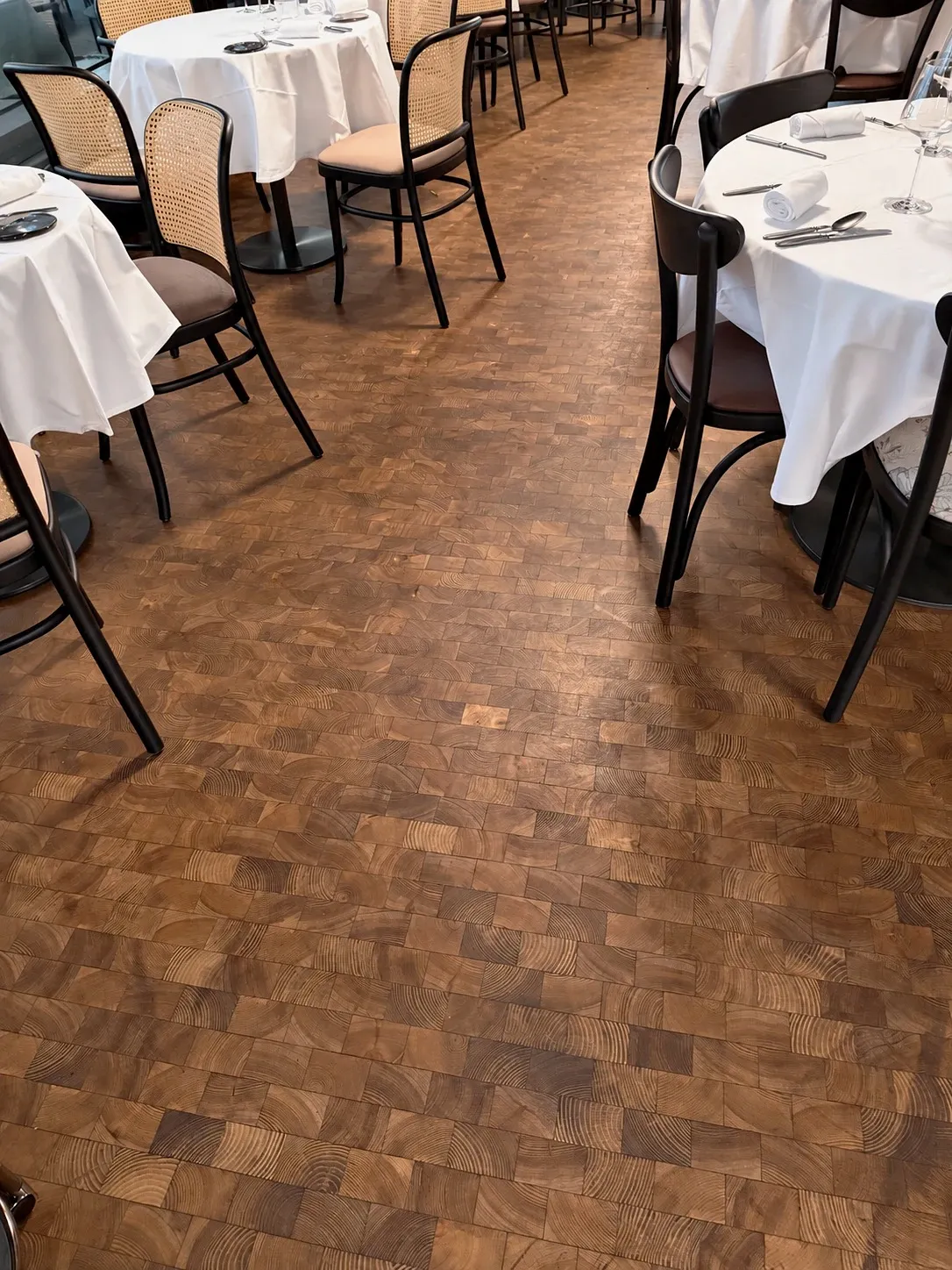
End-grain parquet

The wood fibres run perpendicular to the floor surface. The cross-section of the wood with its growth rings becomes visible — a distinctive, highly resilient surface.

Construction
Solid end-grain blocks
Fibre direction
Perpendicular to the floor
Character
A striking growth-ring pattern
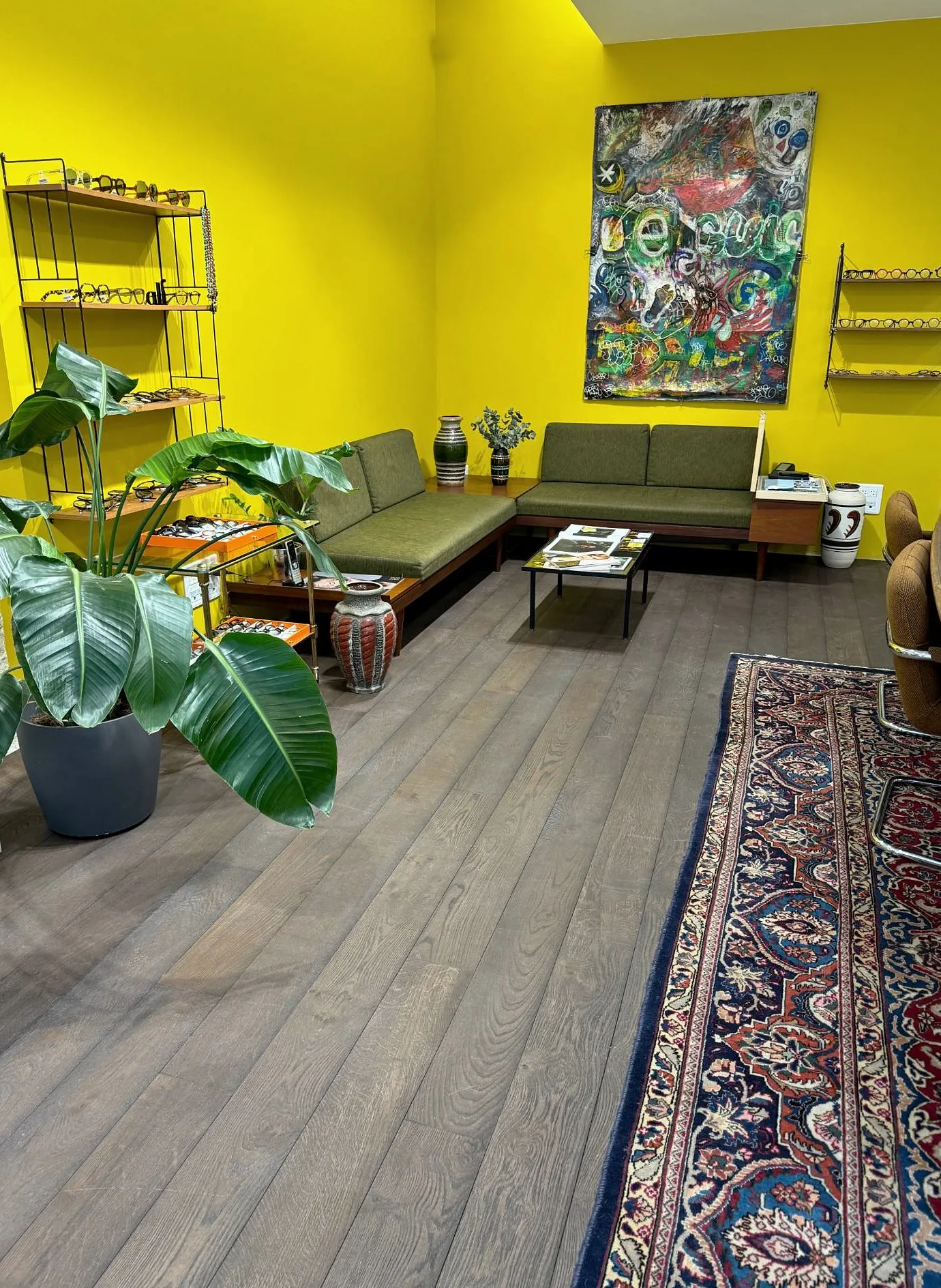
End-grain parquet in a restaurant – Dark toneSee a finished floor

All patterns are schematic illustrations. Dimensions, species, grade and finish determine the actual appearance.

03 / Classic patterns

Pattern parquet. Rhythm underfoot.

Herringbone, chevron, Versailles panels and Norrmen square are laying patterns: they can be made as solid or two-layer parquet. The pattern gives the floor its rhythm, the construction its performance.

Schematic top view of herringbone parquet Square ends, 90°

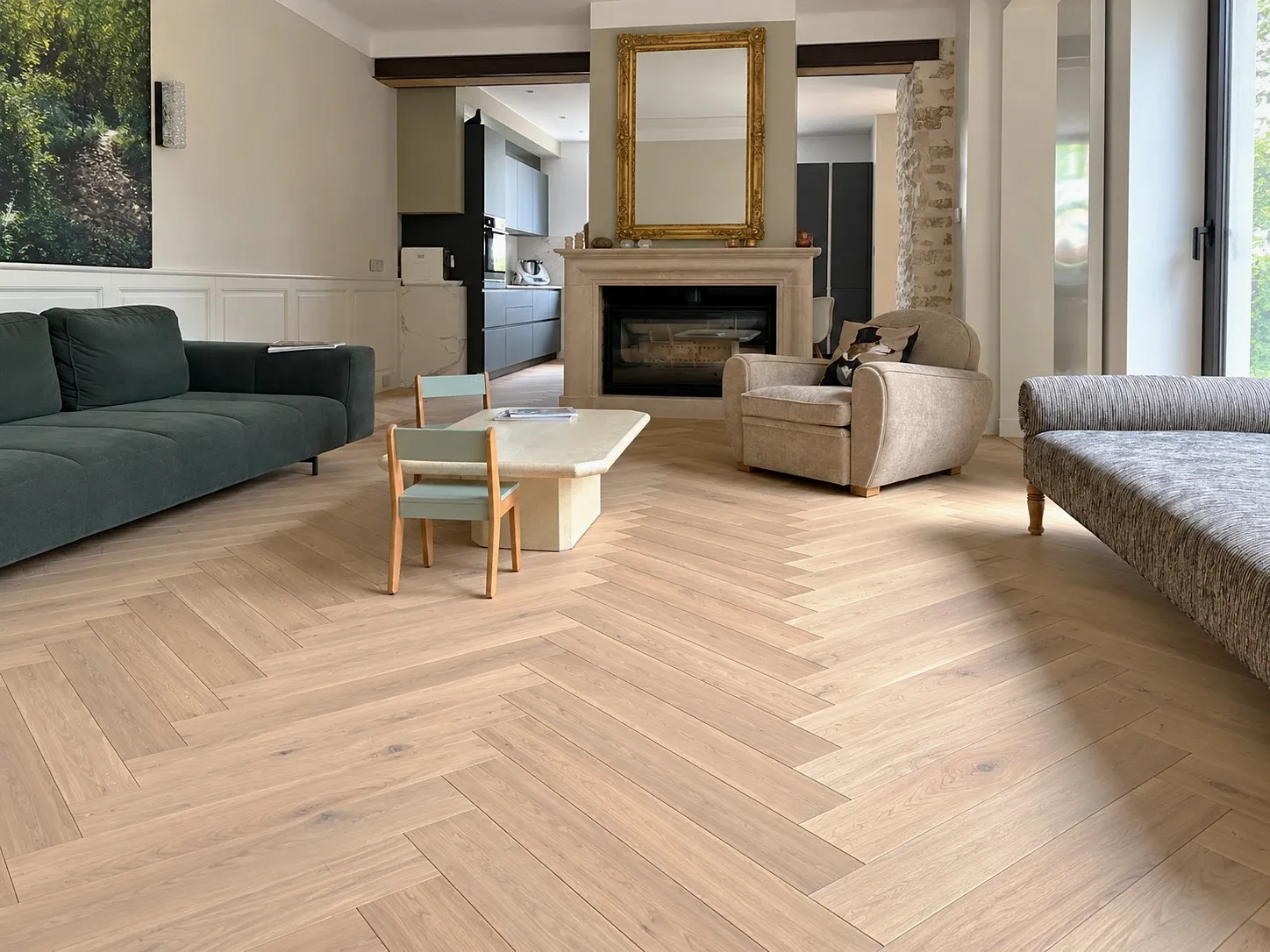
Herringbone

Rectangular blocks are laid in a staggered arrangement at right angles to each other. The result is a lively zigzag that brings rhythm and movement — equally at home in a period apartment and a contemporary interior.

Construction
Solid or two-layer
Block ends
Square-cut, 90°
Character
Classic and lively
Herringbone – OakSee a finished floor Try it in the Floor Designer
Schematic top view of chevron parquet Angled ends

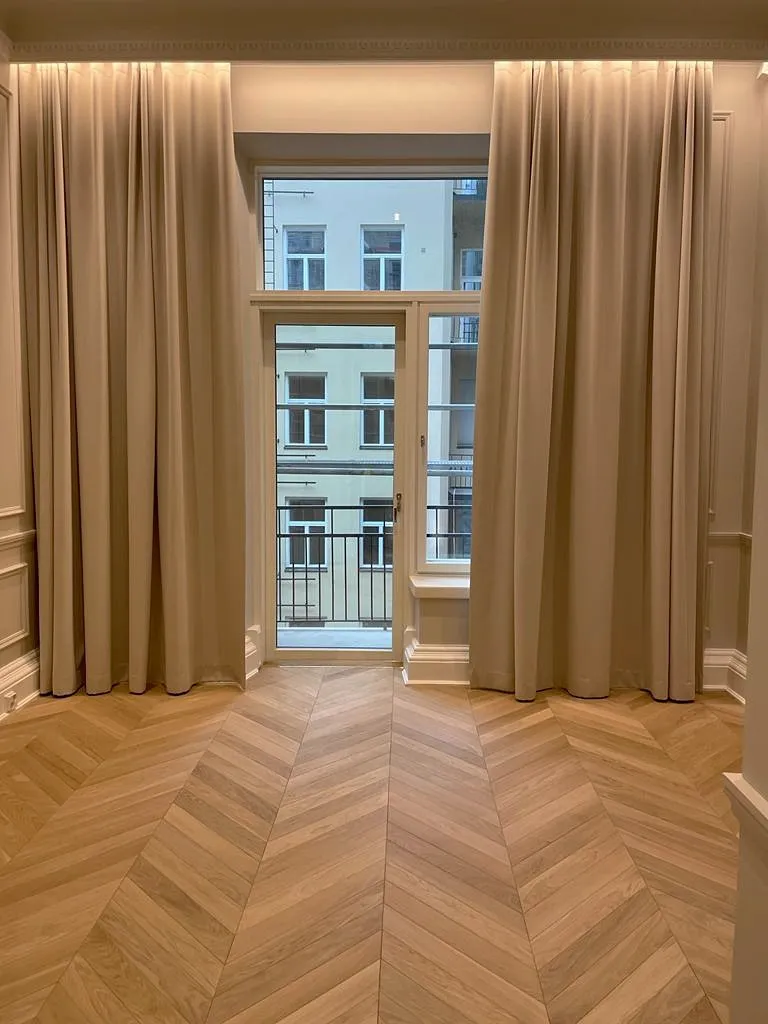
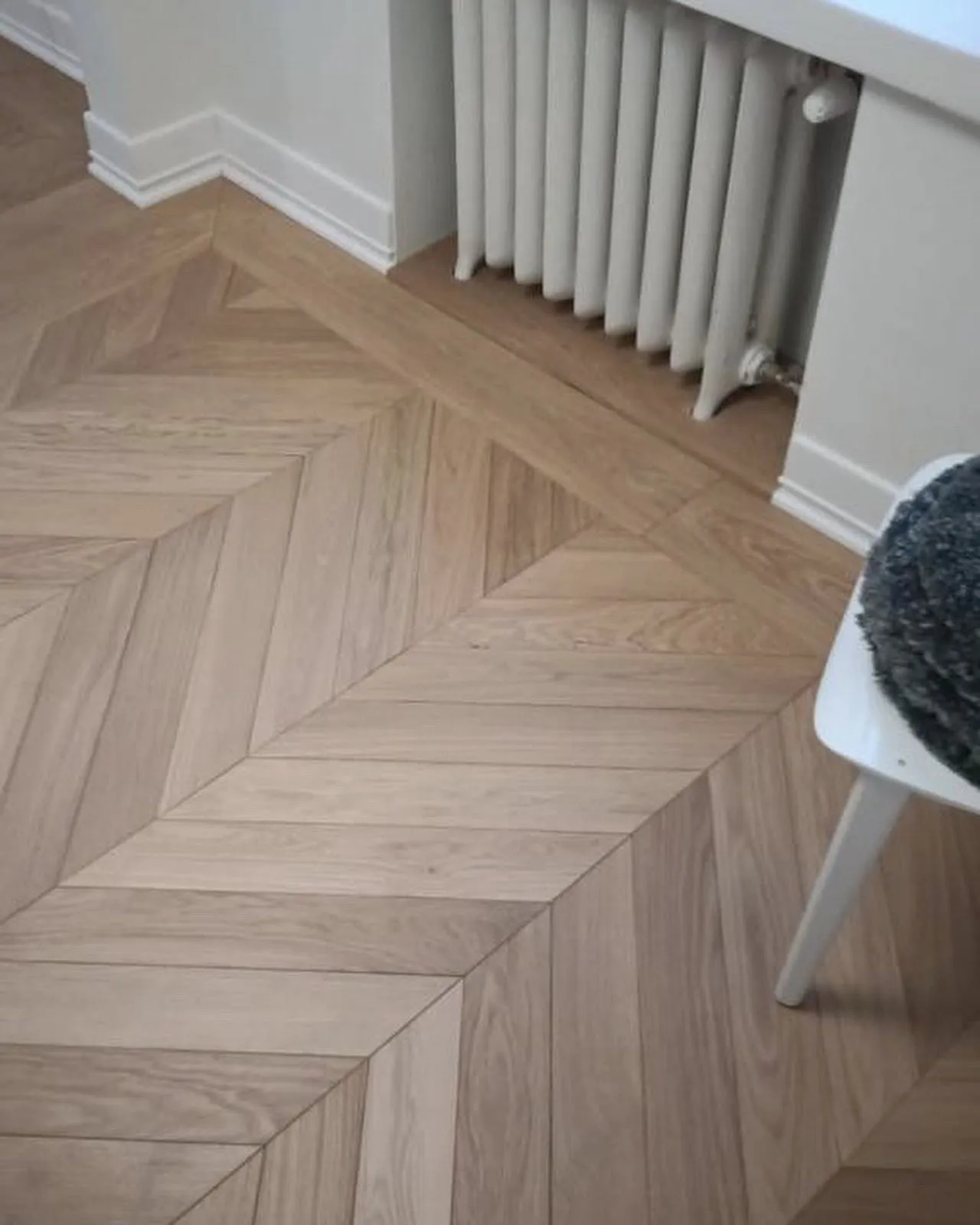
Chevron

The ends of the blocks are cut at an angle and meet along a straight line. The result is a continuous arrow pattern that guides the eye, emphasises the length of a room and gives classic parquet a graphic edge.

Construction
Solid or two-layer
Block ends
Angled, e.g. 45°
Character
Graphic and architectural
Chevron – OakSee a finished floor Try it in the Floor Designer
Schematic top view of Versailles panels Panel parquet

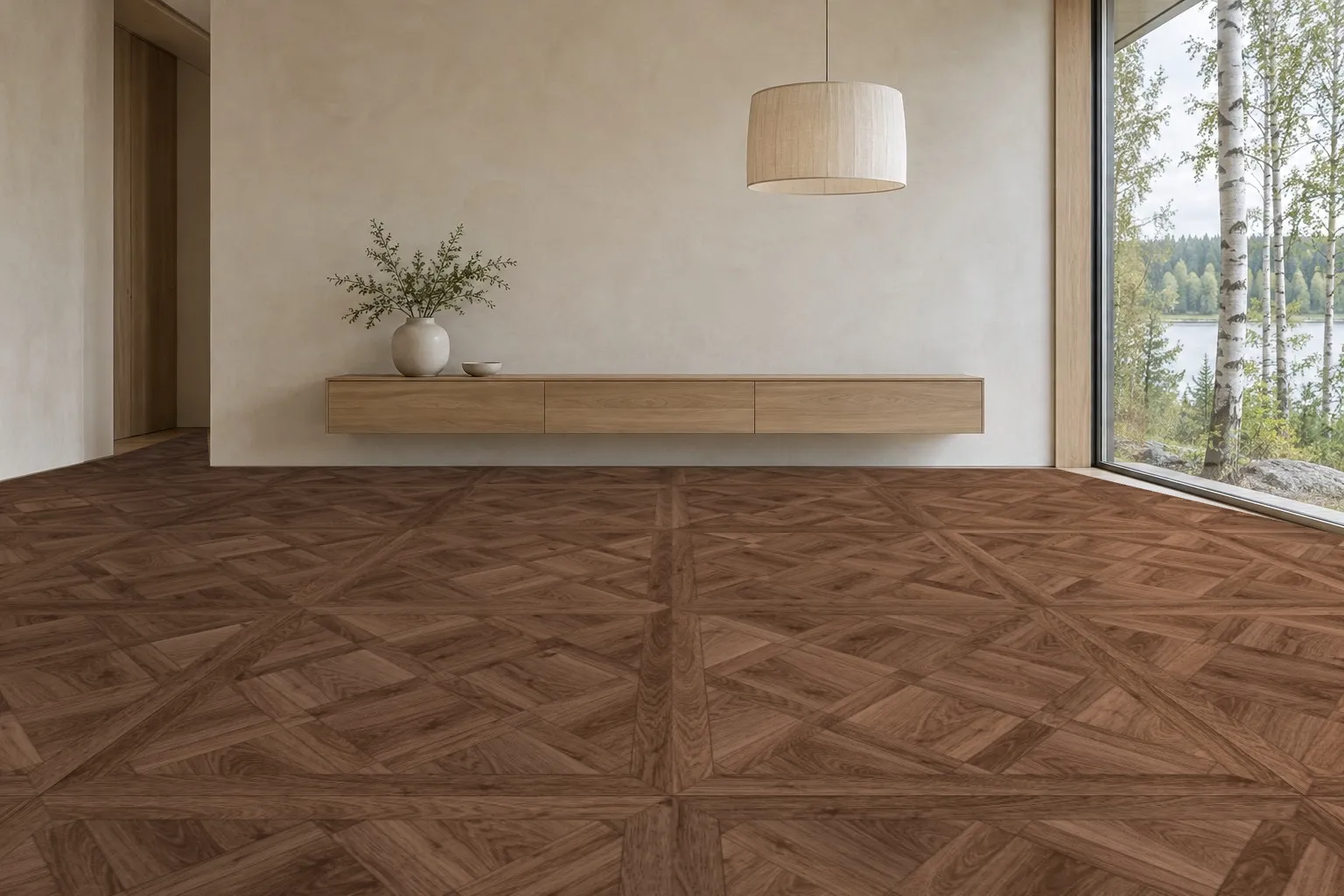
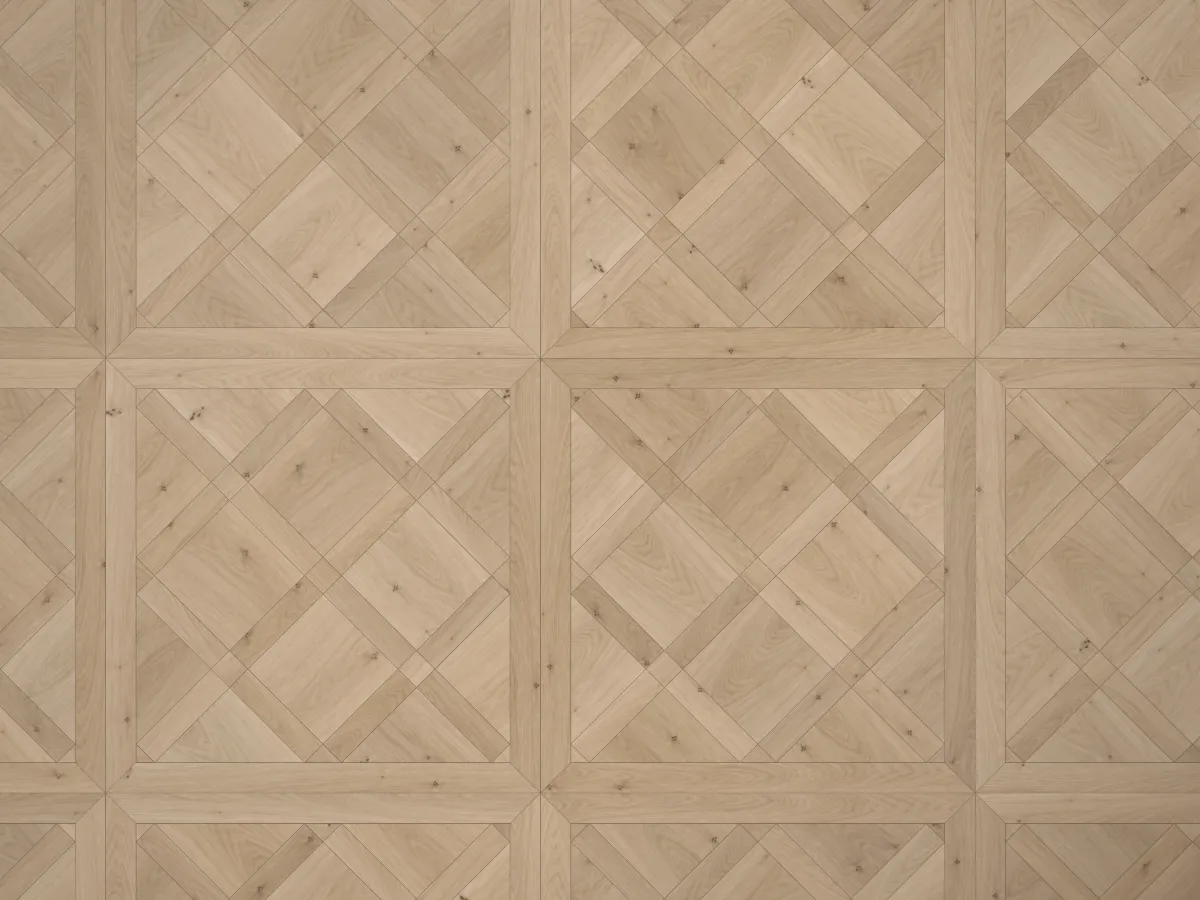
Versailles panels

The wood is assembled into square panels in which a frame and a diagonal lattice form a grand pattern. Versailles is the best-known panel design — and we also make it for restoration projects.

Construction
Pre-assembled panels, solid or two-layer
Panel size
To suit the project
Character
Grand and historic
Versailles panels – OakSee a finished floor Try it in the Floor Designer
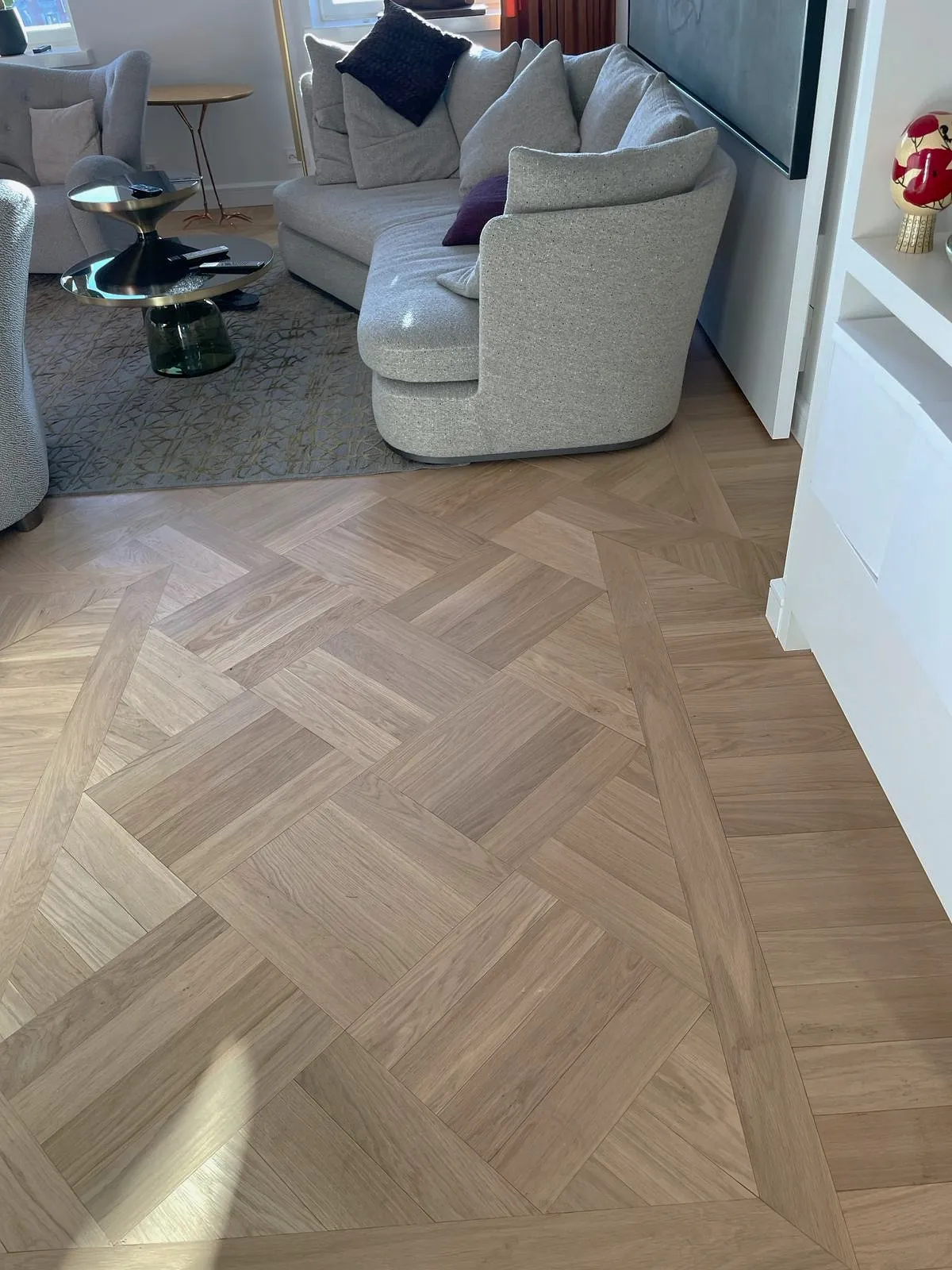
Schematic top view of Norrmen square: a diagonal square field inside a border frieze Diagonal squares and border

Norrmen square

A square pattern laid at 45 degrees: each square is made of parallel strips, and the direction alternates from square to square. A wide border frieze with mitred corners frames the field — a grand choice for a living room or salon.

Construction
Solid or two-layer
Pattern
Diagonal squares at 45°, border frieze
Character
Grand and framed
Norrmen square in a living room: oak diagonal squares inside a border frieze See a finished floor

The patterns are schematic illustrations. Block size, angle, species and tone are chosen for each project. We also make other traditional and custom patterns — for example a copy of the original design in a restoration project. Ask about a pattern

A small detail with a big effect

Direction makes the difference.

Mosaic, Töölö square, planks and pattern parquet

The fibres run mostly parallel to the floor surface. The surface shows the lengthwise-sawn grain.

End grain

The fibres stand perpendicular to the floor surface. The cut face shows the growth rings of the wood.

04 / From surface to subfloor

Constructions compared.

The table shows the principle of a fully glued installation. Any additional subfloor layers depend on the conditions on site.

Top to bottomTwo-layer parquetMosaic, Töölö square and solid plankEnd grain
SurfaceUV hardwax oil, UV oil or oxidative hardwax oilUV hardwax oil, UV oil or oxidative hardwax oilA suitable surface treatment
Upper woodSolid wood top layerSolid wood elements throughoutSolid end-grain blocks throughout
Lower woodA separate backing, birch plywood in the exampleThe same solid woodThe same solid wood
FixingParquet adhesiveA suitable parquet adhesiveA suitable wood-block adhesive
BasePrepared subfloorPrepared subfloorPrepared subfloor

05 / Good to know

Frequently asked.

What exactly does “two layers” mean?

It refers to the solid wood top layer of the parquet element and the backing layer beneath it. The surface treatment, the bonding and the installation adhesive are not counted as additional parquet layers.

Is the mesh under mosaic parquet a backing layer?

The mesh holds the small lamellas together to make laying easier. It is not a stabilising backing board as in two-layer parquet. The individual lamellas remain solid elements.

When is the floor sanded and finished?

Products delivered unfinished are usually sanded and finished after laying. Factory-finished products are installed and maintained according to their own installation and care instructions.

Can parquet be sanded again later?

That depends on the remaining sandable wood thickness, the construction of the element, its condition and any earlier renovations. The full element thickness is not automatically sandable. We recommend assessing the actual floor.

Which construction suits underfloor heating?

What matters is the approval of the specific product, the species, the thickness and the installation system. End grain in particular needs an individual assessment. Suitability cannot be inferred from the label “solid” or “two-layer” alone.

Advice

Your floor begins with the right choice.

We advise you on species, format, finish and the right construction for your project.